
Charlie Kirk
In the middle of fear, anger, and political division, our identity must remain anchored in being children of God. Recent events—even seen in the influence of people like Charlie Kirk—have sparked a worldwide response, with millions turning to God through prayer gatherings, vigils, and church services. Psalm 37 calls us not to fret over evildoers but to trust in the Lord and do good, feeding on His faithfulness and resting in His promises. As we live from this place, our unity and love become a powerful witness that points people to Jesus.
My Response to the Assassination of Charlie Kirk
#1 The Message of the Cross
“Matthew 5:14 “You are the light of the world. A city that is set on a hill cannot be hidden. 15 Nor do they light a lamp and put it under a basket, but on a lampstand, and it gives light to all who are in the house. 16 Let your light so shine before men, that they may see your good works and glorify your Father in heaven.””
Oh my goodness, this is gut-wrenching. It feels like we lost a little brother or a friend…maybe even a prophet. Charlie is one of the most effective people we’ve ever seen at reaching young people with the conservative message, and MORE IMPORTANTLY, the Gospel.
Charlie said in an interview that he was told early on not to talk too much about Jesus, to keep it about politics. As his influence grew, he realized that college students needed to hear the Gospel more than they needed to hear conservative ideas. That what makes our nation great is our Biblical values.
In the last few years, we’ve all watched him become one of the most effective evangelists we’ve seen in generations. And now in death, millions of people are picking up their Bibles and going to church for the first time because of his murder.
It’s hard to put into words why, but the fruit is undeniable. People all over the world are responding to this injustice by seeking God. We are seeing record attendance in churches, public prayer vigils where people are coming together, politicians proclaiming the Gospel, and businesses unashamedly displaying their faith in Jesus.
Why?
Not necessarily because of Charlie’s direct influence, but because when our nation witnessed a young man murdered in front of thousands of college students for sharing his ideas, it shook us. And what came out was a hunger for God.
It doesn’t really matter to me why the nation and the world are responding this way, what matters is that we are.
This is a time for the church (all believers) to shine. We have the answer they’re looking for, we have Jesus. I pray you are ready to be salt and light for the hungry and the hurting. I pray that you are confident in praying for others and sharing the simple Gospel message with people, leading them to faith in Christ. I pray you are provoked to be more vocal about your faith in everywhere you find yourself.
People need you now, they need you to stand up and show them who God really is. People need you to point them to Jesus and help them know that God is a loving God who sent his son to die on a cross so they can break free from the darkness within them and be set free from sin and death. If you need good resources for equippingyourself to share the Gospel, you can go to this page (https://forward.church/goodnews).
Here’s a summary of my message from Sunday where I further discuss these ideas and more…
Our nation and the world feel unsettled right now. Many of us are still processing recent events, asking, What can I do? Where’s my place in all this? That question is important, but before we rush into action, we need to return to the foundation of who we are in Christ.
Each of us lives out of the image we hold of ourselves. People who carry trauma or pain often make choices shaped by that hurt. Others build their identity on career, politics, or family. But the deeper questions never change: Who am I? Who is God? What am I supposed to do? The gospel gives us the answer. God is good. He is not the author of darkness or confusion. He is the author of freedom. He revealed His love by giving us the choice to follow Him, and in Christ He has made a way for us to be accepted apart from our performance. Paul wrote that it is the goodness of God that leads to repentance, and that is where we must root our lives.
The challenge is that the world around us constantly pulls us into its battles. The media thrives on outrage. Political parties prosper by keeping us divided. If we’re not careful, we end up fighting the wrong fights and forgetting who we are. Our identity is not in winning debates or elections. Our first confession must be: I am a child of God, redeemed by Christ, representing His kingdom in this world.
Jesus prayed in John 17 that we would be one, just as He and the Father are one, and that our unity would lead the world to believe He was sent by God. He said again in John 13:34–35 that all would know we are His disciples if we love one another. This is not theoretical—it is what the world is watching right now. When believers unite in love, when we mourn together, when we pray together, it is profoundly attractive to a world searching for meaning. Unity is our strategy. Love is our weapon. The cross is our message.
So what do we do when we don’t know what to do? Scripture gives us a simple, powerful answer in Psalm 37: “Do not fret because of evildoers… Trust in the Lord and do good; dwell in the land and feed on His faithfulness.” That is where we begin. Don’t let fear or anger consume you. Don’t let fretting drive your decisions. Trust God. Do good. Doing good doesn’t earn your righteousness—Christ’s blood has already secured that. Doing good is how we live out our identity in Him. As you step forward in faith, wisdom comes. Purpose doesn’t flow from external signs or circumstances; it flows from intimacy with the Lord.
Psalm 37 goes on to say, “Delight yourself also in the Lord, and He shall give you the desires of your heart. Commit your way to the Lord, trust also in Him, and He shall bring it to pass… Rest in the Lord, and wait patiently for Him… Cease from anger, and forsake wrath; do not fret—it only causes harm. For evildoers shall be cut off; but those who wait on the Lord, they shall inherit the earth.” This is God’s word of comfort and direction for us in times like these.
So here’s the challenge: take time this week to meditate slowly through Psalm 37. Don’t just skim the words—pause at each phrase. Ask, How do I actually live this out? How do I feed on His faithfulness? Give the Word the opportunity to read you. Let it sink deep enough that when crisis comes, your first instinct is not panic or outrage, but confidence in God’s faithfulness.
We are not powerless. We are not at the mercy of politics or headlines. We are children of God, united in Christ, empowered by His Spirit, called to be light in the darkness. When you don’t know what to do, remember this: trust in the Lord, and do good.
Homework
1. Meditate slowly through Psalm 37
Goal: Let the Word “read you,” then translate it into concrete action.
Time: 15–30 minutes per sitting, 3–5 days this week.
Pray briefly: “Holy Spirit, illuminate this to my heart.”
Read aloud Psalm 37, but pause at each phrase. After each phrase ask:
What does this reveal about God?
What does this invite me to believe or do today?
Journal one line per phrase: write a belief and a behavior.
Example: “Trust in the Lord and do good” → Belief: God is faithful to lead me. Behavior: Text my coworker and offer help with their project.
Count the “Do not fret” lines you find and write the final number at the top of your page. (You’ll notice how often God addresses anxiety here.)
Choose one “carry verse” for the day (e.g., “Commit your way to the Lord… and He shall bring it to pass” [Psalm 37:5]) and repeat it at lunch and bedtime.
Close in prayer: thank God for one specific insight and one step you’ll take today.
2. Feed on His faithfulness
Goal: Train your heart to draw strength from God’s proven track record.
Time: 10–15 minutes daily, 5 days.
List three memories of God’s faithfulness (provision, guidance, protection). Put a one-word title by each (e.g., “Rent,” “Healing,” “Open Door”).
Add a fresh item each day this week—big or small.
Speak it back to Him: “Father, You were faithful when ____. You are faithful now.”
Anchor with Scripture: pick one line from Psalm 37 that matches your list (e.g., “Dwell in the land and feed on His faithfulness” [Psalm 37:3]) and say it after your list.
Apply immediately: ask, “Because You were faithful then, what bold, good thing can I do today?”

Living Anointed—The Power Already in You
You are not lacking. You are not waiting for God to do something new. You are filled. You are anointed. You are equipped. The Spirit of God lives in you, and He’s at work—whether you feel it or not.
“Now to Him who is able to do exceedingly abundantly above all that we ask or think, according to the power that works in us…”
Here’s a question I asked in this message, and it’s worth sitting with again: If you believe the Spirit of God is real, and you believe He lives in you, what’s He doing in there?
For too long, we’ve treated the presence of God like it’s a guest that drops in occasionally when we pray hard enough, worship long enough, or behave well enough. But the truth of the gospel is this: you are already anointed. You already carry the presence of God in your innermost being. And that presence is not passive—it’s powerful, alive, and working.
Grace Is Power
“Grace is essentially God’s power working in you that transforms.” It’s what gives you a new heart. It’s the engine behind your spiritual rebirth. It’s what circumcises your heart, removes the body of sin, and gives you the capacity to live as a new creation. But it doesn’t stop there. Grace keeps working. Grace is what helps you forgive, keeps you patient in traffic, gives you compassion in ministry, and equips you with supernatural gifts when you need them.
Grace is God’s active presence in your life. It’s Him doing the work in you and through you.
You Don’t Need More of God—You Just Need to Yield
“God puts His Spirit in you. Jesus puts the Spirit on you.” That’s the promise of the new covenant. When you believed, you were immersed—baptized—into the Spirit. You didn’t just receive a portion of Him. You received the fullness of Christ. You were sealed, filled, anointed, and equipped.
But here’s the nuance: you can have the Spirit in you and still not walk under His influence. That’s why Scripture talks about being filled with the Spirit as something continual. Peter was filled in Acts 2. Then again in Acts 4. Did the Spirit leave him and come back? Of course not. But he yielded again. He was empowered again. He came under the influence again.
“The Spirit’s in you, but you can continually be filled—otherwise known as under the influence of.” It’s not about getting more of God. It’s about God getting more of you. It’s about yielding—again and again—to the power that’s already in you.
Being Filled Looks More Normal Than You Think
We often imagine being filled with the Spirit as some dramatic, ecstatic experience. And yes—sometimes it is. But more often, it’s subtle. Practical. Transformational.
I gave the example in the message of being in traffic, angry, ready to lose it—and then praying. And in that moment, something shifts. Suddenly, you feel compassion. Patience rises up. Where there was frustration, now there’s peace. That’s the Spirit. That’s grace doing its thing. That’s charis—divine influence.
You’ve been there before. You were about to blow it, but something stopped you. You wanted to give up, but somehow strength rose up. You didn’t have the words, but love flowed out anyway. That’s grace. That’s the anointing already working.
Don’t Chase Experiences—Stay Rooted in Jesus
One thing I want to be very clear about: everything we’re talking about—grace, anointing, the Spirit’s power—must stay grounded in Jesus.
There’s a temptation in charismatic circles to chase the mystical. To build doctrines around people’s experiences. To invent formulas and methods and legalistic hoops to jump through in the name of deliverance or power. But that’s not the gospel.
Jesus is the center. The cross is the anchor. The gospel is not just the starting line—it’s the whole race. Everything God gives you flows from the finished work of Christ. So stay focused. Stay gospel-centered. Don’t get distracted by spiritual fads. Keep it about Him.
You’re Not Incomplete—You’re Already Empowered
Let me leave you with this:
You are not lacking. You are not waiting for God to do something new. You are filled. You are anointed. You are equipped. The Spirit of God lives in you, and He’s at work—whether you feel it or not.
The question is: will you acknowledge Him? Will you yield to Him? Will you let that power rise and influence how you think, speak, and respond?
You don’t need to strive. You don’t need to earn it. You just need to trust and walk with Him.
That’s the invitation.
Not to perform.
Not to chase power.
But to walk in what’s already true.
You’re already anointed. Now live like it.

How to Let the Word Read You
The beauty of this process is that the Word doesn’t just expose—it empowers. Once the Word shows you the thought patterns and beliefs that are out of alignment with Christ, it also provides the truth that replaces them.
#1 Two Kinds of Prayer
“For the word of God is living and powerful, and sharper than any two-edged sword, piercing even to the division of soul and spirit, and of joints and marrow, and is a discerner of the thoughts and intents of the heart.”
You know you should “Read your Bible.” It’s foundational. But I want to offer a deeper invitation—one that goes beyond daily reading plans or memorization. I want to invite you to let the Word read you.
That’s not just a clever turn of phrase. It’s one of the most powerful and freeing spiritual disciplines you can develop. When you engage scripture in this way—open, honest, and present—you allow God’s Word to reveal your true beliefs, even the ones you don’t realize you hold. That’s where transformation begins.
Scripture Is Alive
Hebrews 4:12 tells us, “For the Word of God is living and powerful, sharper than any two-edged sword, piercing even to the division of soul and spirit… and is a discerner of the thoughts and intents of the heart.” That word “discerner” doesn’t just mean judge or analyze—it means the Word helps you see yourself clearly.
Think of it this way: we’re not just reading scripture for information—we’re reading it for revelation. And not just revelation about God’s character (though that’s essential)—but also revelation about what’s going on inside us. Because let’s be honest: you can know truth intellectually and still live bound by beliefs you picked up from trauma, religion, upbringing, or emotional survival strategies.
My Story: From Survival to Transformation
For me, growing up without a healthy example of faith left some deep grooves in my thinking. I wasn’t raised in church. I wasn’t taught how to renew my mind or steward my emotions. My dad was wild, and I followed in his footsteps for a while. The model I inherited was: do what you want, just don’t get caught. Morality wasn’t even part of the equation.
Even after I got saved and started growing in Christ, I carried broken thinking into every area of life—relationships, emotions, even finances. I didn’t know it at first. I thought I was doing better. But under the surface, I was still reacting out of old patterns that didn’t reflect the new heart God had given me.
That’s the thing about transformation: it’s not just behavior modification. It’s mind/heart renewal.
And that happens when you allow the Word to show you what you actually believe—especially in the areas where you’re stuck or repeating painful cycles.
Your Heart Is the Filter
Proverbs 4:23 says, “Above all else, guard your heart, for everything you do flows from it.” That’s not just poetic language. It’s a spiritual and psychological truth. Your heart—your deep belief system—is the filter through which you interpret life. It’s where you believe, where you fear, where you resist, and where you respond.
Even as believers with a new nature in Christ, we can still operate out of old beliefs if we don’t renew our minds and allow truth to reshape our perceptions and self-image.
This is why you can be saved and still live stuck in cycles that don’t reflect who you are in Christ. It’s why you can know all the right verses and still live with fear, insecurity, guilt, or shame.
Knowing the Word isn’t the same as letting the Word do its work in you.
What It Looks Like to Let the Word Read You
Letting the Word read you means reading scripture slowly, with the Holy Spirit, and paying attention to your internal reactions.
When you read that God is your provider—do you believe it, does it feel true?
When you read that you are righteous in Christ—do you feel unworthy?
When you read that perfect love casts out fear—do you still brace for rejection?
Those emotional responses aren’t just passing thoughts. They’re indicators of what your heart actually believes. And that’s not something to be ashamed of. It’s something to bring into the light.
Jesus already took judgment on Himself. This process isn’t about earning anything. It’s about stepping into what’s already been given.
I like to say it like this: the Word of God is like a spiritual X-ray. It shows you what’s healed and what still needs alignment.
The Word Discerns—and Then It Empowers
The beauty of this process is that the Word doesn’t just expose—it empowers. Once the Word shows you the thought patterns and beliefs that are out of alignment with Christ, it also provides the truth that replaces them.
That’s what repentance really is. Not groveling or beating yourself up. Repentance means to change your mind—to align your thoughts with God’s truth.
So when the Word shows you an area where your heart isn’t in sync with the Spirit, that’s not a moment for condemnation. That’s an invitation into freedom.
And this is where the real work begins—what scripture calls the “put off, put on” process. You put off the old thought, the old pattern, the old belief. And you put on truth. You rehearse it. You plant it. You let it saturate your inner world until it becomes your new instinct.
This is what Paul meant in Romans 12:2 when he said to be “transformed by the renewing of your mind.” Transformation doesn’t come from trying harder—it comes from thinking different. And thinking different comes from letting the Word shape your heart.
You Were Made to Hear God
I want to emphasize this: you were designed to hear God. When your heart is filled with the Word, your natural intuition becomes a reliable guide. You stop wondering, “Is that me or is that God?”—because your inner world has been renewed and aligned with His truth.
Jesus said His sheep hear His voice (John 10:27). That’s not limited to mystical moments of hearing an audible voice. Often, it looks like scripture rising up in your heart at the exact moment you need it. It looks like wisdom shaped by truth, peace that surpasses understanding, and clarity that comes from knowing the Father’s heart.
You don’t have to chase revival, chase goosebumps, or wait for a sign. If you’ll let the Word of God live in you richly, you’ll carry the voice of God everywhere you go.
Letting the Word read you is not about hyper-introspection. It’s not about perfectionism or performance. It’s about partnering with the Holy Spirit to see what’s in your heart, and then letting the Word reshape that space.
It’s slower than most of us like. But it’s deeper than we often go. And the fruit is lasting transformation.
So I’ll leave you with this: open the Word. Read it slowly. Pay attention to how you respond. Be honest with God. Let the Word discern your heart. And then let the Spirit guide you into truth.
Because that’s where you’ll find peace. That’s where you’ll find purpose. That’s where you’ll experience real change—from the inside out.
So let’s do that together. Below is a guided meditation through Psalm 139. This is just one technique, make it your own. Don’t rush. Let the Word speak. Let your heart respond. And pay attention to what rises up—because that’s where God wants to meet you.
Guided Meditation: Let the Word Read You (Psalm 139:1–12)
Settle in.
Find a quiet place. Take a deep breath. Invite the Holy Spirit to reveal, not just teach.
Remember: The Word of God (Christ in you) is alive. It goes into every aspect of your being; spirit, soul, and body. It will discern the deep thoughts, beliefs, and motivations of your heart. And if you will let it, it will shape you into the image of a child of God, just like Jesus.
Say out loud: “Jesus, I trust You. Search me with Your Word.”
Psalm 139:1
O Lord, You have searched me and known me.
Pause.
Ask: Do I believe God really knows me?
What emotions or thoughts surface when I say “God knows me”?
Do I feel seen… or exposed? Safe… or afraid?
Psalm 139:2
You know my sitting down and my rising up; You understand my thought afar off.
Ask: What do I believe about God’s awareness of my daily life?
Do I feel like He understands me—or misunderstands me?
Am I trying to hide any thoughts from Him?
Psalm 139:3
You comprehend my path and my lying down, and are acquainted with all my ways.
Let this one sink in.
Ask: What does it mean that He knows all my ways?
Do I feel comforted by that—or exposed?
If He sees it all, how do I think He feels about me?
Psalm 139:4
For there is not a word on my tongue, but behold, O Lord, You know it altogether.
Ask: How do I feel about God knowing my unspoken words?
Does that stir up peace or discomfort?
Am I willing to let Him shape how I speak—and why?
Psalm 139:5
You have hedged me behind and before, and laid Your hand upon me.
Ask: Do I feel protected or trapped?
Do I want His hand on me—or do I feel the need to resist?
What would it take to fully trust His boundaries as safety?
Psalm 139:6
Such knowledge is too wonderful for me; it is high, I cannot attain it.
Ask: Am I comfortable with the mystery of God’s closeness?
Can I rest in His wonder—or do I try to figure everything out?
Psalm 139:7
Where can I go from Your Spirit? Or where can I flee from Your presence?
Ask: Is this comforting—or intimidating?
Do I want God close at all times?
Or are there parts of me I still try to keep hidden?
Psalm 139:9–10
If I take the wings of the morning, and dwell in the uttermost parts of the sea, even there Your hand shall lead me, and Your right hand shall hold me.
Ask: Do I believe He’ll lead me even in my messiest places?
What’s my first reaction to the idea that He follows me even there?
Can I accept that even in my darkest moments, His hand is still guiding?
“Father, thank You for Your Word that knows me better than I know myself. I don’t want to hide anymore. I want to be transformed. Show me what I believe. Show me what needs to be renewed. I trust You to lead me into truth, peace, and wholeness. I receive Your hand upon me, and I surrender to Your love working in me. In Jesus’ name, amen.”
Transformation doesn’t come from trying harder. It comes from seeing clearer.
Let the Word show you what’s really going on in your heart.
And then trust the Spirit of God to lead you out of it and into life.
You were made to perceive Him. Let His Word fill your heart so that your intuition becomes a trustworthy guide, echoing His truth, peace, and love.
You’re not stuck. You’re not too far gone. You’re not behind.
You’re right on time for freedom. Let the Word read you.

How to Ask in Faith: A New Covenant Perspective on Prayer
“You’re not waiting on God. He’s already moved. Now it’s your turn to walk in what He’s done. Think, feel, and see the truth when you pray—and let the reality of Christ’s finished work renew your mind and transform your life.”
#1 Two Kinds of Prayer
“If we ask anything according to His will, He hears us—and we know we have what we asked.”
Prayer is one of the most vital aspects of our walk with the Lord. It's multifaceted—where we interact with Him, where we listen, where we ask, and where we declare. Today, I want to focus on how to ask in faith, and what that looks like in light of the finished work of Jesus Christ. Over the next few weeks, we’ll be diving into this theme of prayer leading up to Easter, but this message sets the foundation by tackling our mindset and heart posture when we pray. When we truly understand what Christ has already accomplished, it transforms how we pray—shifting us from pleading to confident expectation.
Declaring vs. Asking in Prayer
To begin, it's helpful to categorize two basic types of prayer: declaring and asking. While there are many forms of prayer, these two give us a foundational framework. Declaring is when you speak what is already true in Christ—what He has finished, what He has given, what He has promised. Asking is when you request something, often needing wisdom or insight, or drawing from what Jesus has already made available. These are not mutually exclusive forms but work together.
We are not trying to twist God's arm or convince Him to act. As I put it, “We have a unique presentation of the gospel here in that we just really focus on the finished work. We focus on who we are in Christ. We focus on the effects of the death, burial, and resurrection. And we look at the idea that as we behold Him, we become like Him.”
So much of prayer is about reframing. It’s about holding up our situations in the light of what Christ has already done. It’s less about asking God to come down and intervene, and more about learning to see our reality through the lens of our union with Christ.
You Are Already Perfect in Spirit
Before we were in Christ, we were spiritually dead—cut off from God, alienated, lost. But something miraculous happened when we placed our faith in Jesus. “We were dead in our sin… But then when we put our faith in Him, He gives us a new heart. He resurrects our spirit.”
So many believers struggle with the concept of being “perfect in spirit,” but the reality is, “You could say you’re perfect in spirit right now. Say it: ‘I’m perfect.’ And if you think that you're not, then quit being self-righteous.” This kind of bold language may make some uncomfortable, but it’s key to understanding our identity. We’re not saying our flesh is perfect. We’re saying our spirit has been made new—righteous, holy, blameless in Him.
2 Peter 1:3-4 tells us that God “has given us all things that pertain to life and godliness,” and through His great and precious promises, we become partakers of the divine nature. That’s not future-tense—it’s now. This is why we can approach God with confidence. We are not unworthy beggars. We are beloved sons and daughters, qualified by Christ Himself.
The Legal Battle Is Over
Sometimes when we pray and we don't see immediate results, doubt creeps in. We start making lists in our heads—maybe I didn’t give enough, maybe I brought something cursed into my home, maybe I’m disqualified. But these thoughts are rooted in law-based thinking.
As I said during the message, “You start thinking, ‘Maybe I brought some Masonic coins into my home and there's a demon robbing my blessing’… and it’s like, if you start thinking that way, then you get into this legal battle that has already been dealt with.”
Colossians 2:14 is clear: the law that stood against us has been nailed to the cross. That means there's no longer any accusation that has legal standing. “Everything past, present, and future—He nailed it to His cross.” That’s not permission to sin. It’s an invitation to live in freedom, knowing our righteousness is a gift. “I want to live in a way that reflects the holiness He’s done on the inside of me… I say no to sin—not to be accepted, but because I already am.”
Asking According to His Will
When we ask in prayer, we ask according to His will. But what does that mean?
Let’s look again at these anchor scriptures:
1 John 5:14-15 – “Now this is the confidence that we have in Him, that if we ask anything according to His will, He hears us. And if we know that He hears us, whatever we ask, we know that we have the petitions that we have asked of Him.”
Mark 11:24 – “Whatever things you ask when you pray, believe that you receive them, and you will have them.” (KJV: “believe that ye have received them”)
Philippians 4:6-7 – “Be anxious for nothing, but in everything by prayer and supplication, with thanksgiving, let your requests be made known to God…”
John 14:13-14 – “Whatever you ask in My name, that I will do… If you ask anything in My name, I will do it.”
Asking “in His name” means in line with His nature, His character, His authority. “We’re not naming it and claiming it. We’re not calling Bugattis into our lives,” I joked—but the truth is, God isn’t withholding things from us. He wants us to know His will so we can ask with confidence.
And how do we know His will? Scripture, His character, our identity in Him, His promises—and most of all, the finished work of the cross.
Prayer in Light of the Cross
Our model for prayer must be shaped by what Jesus accomplished at the cross. Isaiah 53 gives us a prophetic glimpse into this great exchange:
“Surely He has borne our griefs and carried our sorrows… the chastisement for our peace was upon Him, and by His stripes we are healed.”
So what do we do when we’re depressed, anxious, or overwhelmed? We look to the cross. “You may feel like a loser. But what did He do that I can ask for? He carried my sorrows. He bore my griefs. He felt the shame, the condemnation, the rejection. So now, I can expect healing. I can expect peace. I can expect joy.”
This is not wishful thinking. This is a legal transaction. “It’s yours now. The timing was 2,000 years ago.”
Faith Is Not a Bribe
It’s important to remember that faith doesn’t get God to move. God has already moved. Faith is not leverage; it’s a response. James 1:5-8 tells us to ask for wisdom in faith, “with no doubting.” God gives “liberally and without reproach.”
We don’t go to Him and get reminded of our failures. We go to Him and get reminded of His provision. “He’s not going to say, ‘Well, you haven’t been to church in a while.’ He’s going to remind you, ‘Remember the cross. I dealt with that.’”
Double-mindedness is a battle most Christians face. The Greek word dipsychos means “two-souled”—split between faith and doubt. As I said plainly, “Most of our prayer is doubt-driven and lack-focused.” But that’s not who we are. We can learn to bring our hearts into alignment with truth.
Capturing Every Thought
This leads us into true spiritual warfare. It’s not about chasing demons; it’s about stewarding our inner world. 2 Corinthians 10:4-5 says:
“The weapons of our warfare are not carnal but mighty in God for pulling down strongholds… bringing every thought into captivity to the obedience of Christ.”
You’re not trying to get demons to obey Jesus. “You’re wrestling your thoughts into captivity until your thoughts are in agreement with what Jesus accomplished on the cross.”
That’s the battle. And you do it not just until your thoughts agree mentally, but until your emotions and mental pictures shift too. “Think, feel, and see the truth when you pray.” That’s transformation.
Transformation Through Mind Renewal
Romans 12:2 tells us to be transformed by the renewing of our mind. That’s how you prove what God’s will is. It’s not about striving—it’s about being renewed.
And when it comes to sin? “Stop it. It’s killing you.” Not because God is angry, but because it’s harming your ability to walk in what God has for you. “It’s damaging your capacity to be shaped and molded and transformed by the Spirit of the living God.”
The blood of bulls and goats couldn’t cleanse your conscience. But the blood of Jesus does. He cleanses your heart so you can approach Him boldly, not weighed down by guilt or shame. And when that happens? “You are unstoppable.” Not because of your strength, but because of what you’re letting God do in you.
Practical Application
Let me leave you with something to do:
Pick an area in your life that you want to see transformed.
Read Isaiah 53.
Ask yourself: What did Jesus do on the cross that applies to this?
Meditate on that truth until it brings hope and changes how you see the situation.
“Host the word.” That’s what we do. We don’t strive. We plant the seed, and the seed grows. We stay in faith. We think, feel, and see the truth.
The transformation doesn’t come from trying harder. It comes from beholding Him.
So let me ask you: Are you ready to ask in faith?
Then declare what’s true. Ask boldly. And renew your mind until you’re fully persuaded of what Jesus has already given you.
“Peace, joy, righteousness, healing, provision—rightfully, legally, yours. Now. Say ‘Now.’”
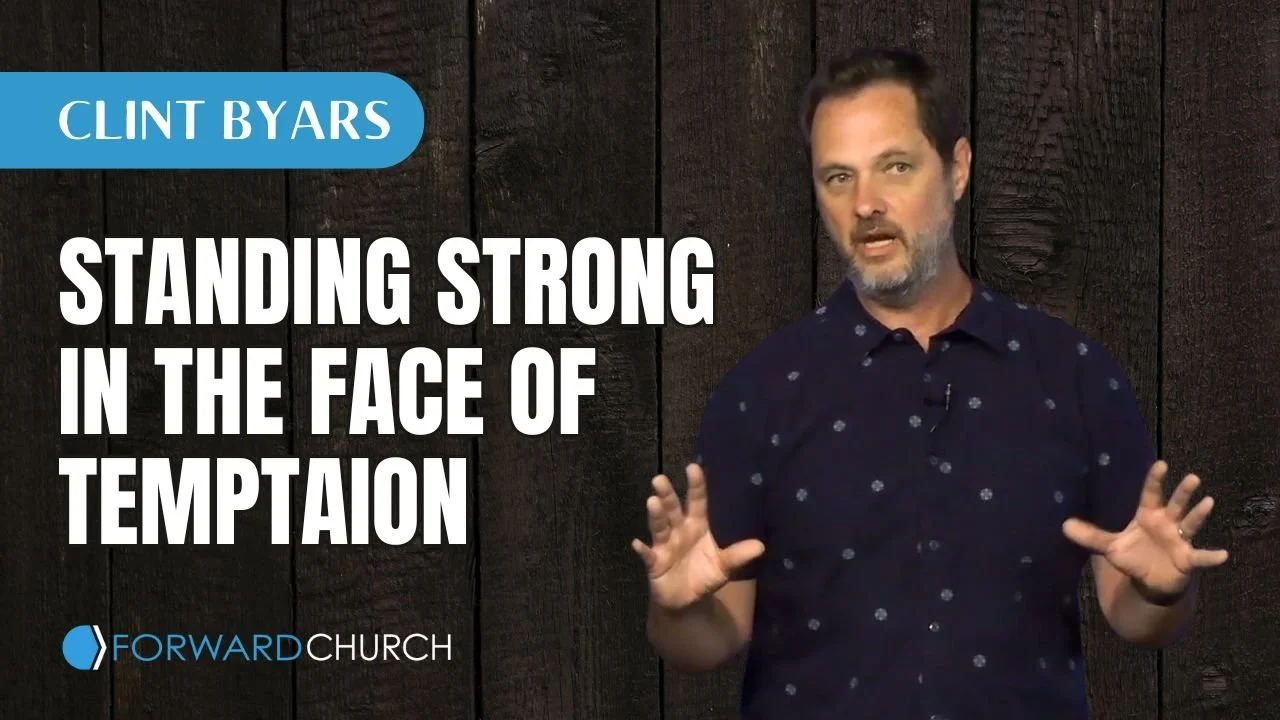
There Is a Godly Way to Fulfill Every Desire You Have
James teaches us that temptation comes from within. We’re only tempted by the things that we desire. There is a godly way to fulfill every desire, but through brokenness, perversion, and confusion, we choose to fulfill our natural desires in ways that do not honor God’s natural order, which is sin. But sin is no longer our master, for we are dead to sin in Christ. Join us today as we discuss how to stand in His strength and overcome.
Easter Sunday
“But each one is tempted when by his own evil desires he is lured away and enticed.”
Where Does Temptation Come From?
Understanding the Root of Desire, the Nature of Sin, and How to Overcome Temptation in Christ
Temptation is one of the most universal experiences in the human condition, yet it’s often misunderstood. Many believers wrestle with shame or confusion, wondering why they struggle with certain thoughts or urges, assuming something is inherently wrong with them. But the Bible paints a more nuanced picture.
At its root, every desire we have is part of God's design. God created humans with longings—for connection, meaning, influence, creativity, sexuality, food, purpose, love. These desires are not sinful in and of themselves. In fact, they are reflections of our design in God's image. But because we live in a fallen world, and because of personal trauma, abuse, or cultural perversion, we often begin to express those God-given desires in broken or sinful ways.
As James 1:13–15 (NKJV) explains:
“Let no one say when he is tempted, ‘I am tempted by God’; for God cannot be tempted by evil, nor does He Himself tempt anyone. But each one is tempted when he is drawn away by his own desires and enticed. Then, when desire has conceived, it gives birth to sin; and sin, when it is full-grown, brings forth death.”
This passage shows clearly that temptation begins inside us. The enemy doesn’t plant foreign desires into our hearts. He tempts us by leveraging the desires we already have—and trying to twist or shortcut the way we meet those desires.
The Temptation of Jesus: A Blueprint
Let’s look at how temptation works by observing Jesus' temptation in the wilderness (Matthew 4:1–11; Luke 4:1–13). This moment in Jesus’ life offers one of the clearest demonstrations of both the strategy of the enemy and the way of victory.
After His baptism, Jesus received public affirmation from the Father:
“This is My beloved Son, in whom I am well pleased” (Matthew 3:17).
Immediately after this powerful moment of identity, the Spirit led Him into the wilderness to be tempted. And what was the first thing Satan said?
“If You are the Son of God…” (Matthew 4:3)
The enemy attacked Jesus’ identity—the very truth the Father had just spoken. Jesus’ desire to walk as God’s beloved Son was pure and good. But the enemy tried to sow doubt and lure Him to prove who He was outside of trust in the Father. This is how temptation works: it targets our identity and offers a shortcut.
The next temptation came after forty days of fasting. Jesus was hungry. So Satan said:
“Command that these stones become bread” (Matthew 4:3)
Again, the desire was legitimate—hunger is natural. But Satan tried to entice Jesus to misuse His divine power to meet a valid need in an illegitimate way, breaking His fast prematurely and stepping outside of God's leading. Jesus responded:
“It is written, ‘Man shall not live by bread alone, but by every word that proceeds from the mouth of God.’” (Matthew 4:4)
Finally, Satan offered Jesus all the kingdoms of the world—if He would worship him (Matthew 4:8–9). Why would this tempt Jesus? Because Jesus knew the Father had promised Him the nations. Psalm 2:8 says:
“Ask of Me, and I will give You the nations for Your inheritance, and the ends of the earth for Your possession.”
Jesus had read the Scriptures. He knew He was destined to reign, to be King of kings and Lord of lords (Revelation 19:16). But again, Satan offered Him a shortcut—to claim the promise without the cross.
This is the essence of sinful temptation:
a shortcut to fulfill a godly desire in an ungodly way.
Why We Sin: Broken Expression of Good Desire
Unbelievers sin because it’s their nature. New creations in Christ sin not because we’re evil by nature in Christ, but because we choose to express our desires in broken ways. Lust is a shortcut to intimacy. Greed is a shortcut to provision. Pride is a shortcut to influence. Jealousy is a shortcut to belonging. All sin is misdirected desire, and temptation works by enticing us to satisfy a legitimate need or longing apart from God’s way.
But in Christ, we are made new (2 Corinthians 5:17), and we don’t have to follow the pattern of the flesh anymore. As believers, we are no longer slaves to sin (Romans 6:6–7).
How Do You Overcome Temptation?
Let’s follow Jesus’ model and Scripture’s instruction:
Keep your heart pure before God.
Proverbs 4:23 says:“Keep your heart with all diligence, for out of it spring the issues of life.”
Be honest with God about your desires. Let Him search and heal the broken places.Know what is written.
Jesus resisted temptation by quoting Scripture. The Word of God is your sword (Ephesians 6:17). Whatever area you struggle with—whether it’s sexual sin, anger, control, insecurity—find out what God says about it. The Word transforms desire.Know your identity in Christ.
Jesus didn’t perform to prove who He was—He stood on what the Father said. You are God’s beloved child (1 John 3:1). You have everything you need for life and godliness (2 Peter 1:3). Temptation loses power when you're rooted in your identity.Rely on grace in the moment.
Hebrews 4:15–16 says:“For we do not have a High Priest who cannot sympathize with our weaknesses, but was in all points tempted as we are, yet without sin.
Let us therefore come boldly to the throne of grace, that we may obtain mercy and find grace to help in time of need.”Grace is not just forgiveness after the fact—it’s power in the moment to do what’s right from the heart.
God’s Goal: Fulfilled Desires, God’s Way
God is not trying to strip you of desire. He wants to fulfill the desires of your heart—in a holy, life-giving way.
Psalm 37:4 says:
“Delight yourself also in the Lord, and He shall give you the desires of your heart.”
That doesn’t just mean you get what you want. It means He shapes your desires and satisfies them with Himself.
So when you're tempted, remember:
It starts with a good desire.
The enemy offers a shortcut.
The Word offers a way of escape.
Your identity in Christ secures your victory.
Grace empowers you to walk it out.
If you stay rooted in God’s truth, your desires will not destroy you. They’ll lead you into deeper intimacy with God, and you’ll learn to walk in victory, expressing every desire in a way that glorifies Him.

He Is Risen: Living from the Finished Work of Christ
You are holy, unblemished, and blameless. Not because you’ve earned it, but because Jesus has presented you that way to the Father… So live from that place. This is not about striving. This is about resting in what Jesus has done. Let Him love you into wholeness.
Easter Sunday
“[Jesus] was delivered over to death for our trespasses and was raised to life for our justification.”
The Stone Was Rolled Away for Us
Jesus' resurrection changed everything. One of the first miracles we see is that He could walk through walls—so the stone covering His tomb wasn’t rolled away so He could escape. It was rolled away so that we could look in. And who were the first witnesses? Women—Mary Magdalene, who had a shady past, and Joanna. Their testimony was legally invalid in Jewish courts, yet God chose them to be the first proclaimers of the resurrection. This speaks volumes about how God values each individual, regardless of their past or cultural limitations. Their inclusion in the story adds authenticity to the gospel account—it’s not what someone would make up if they were trying to convince a skeptical audience.
God Had to Become Man
We must understand that Jesus didn’t overcome death simply because He was God. God gave dominion over this world to humanity. That means a human had to fix what was broken. A spiritual being couldn’t intervene without violating that original authority. So God became man. Jesus, as a perfect man, bridged the gap. He fulfilled the law and lived without sin, qualifying Himself as the substitutionary atonement for all of mankind. He could repair the breach between God and humanity—not as God in His divinity, but as God in the flesh.
It Wasn’t Just to Appease Anger—It Was to Kill Death
This part of the gospel often causes confusion. The shedding of blood and sacrificial language can sound brutal or even pagan to modern ears. But it wasn’t about satisfying a bloodthirsty God. Rather, it was about confronting and destroying death. God was indeed angry with wickedness, but Jesus' sacrifice wasn't about appeasing wrath—it was about breaking sin’s power. As I said, "Death had to be killed." Jesus suffered your sin on the cross and your death in the grave so that you never have to taste separation from God.
Romans 4:25 — Delivered and Raised
"[Jesus] was delivered over to death for our trespasses and was raised to life for our justification." (Romans 4:25)
The full effect of our sin ran its course in Jesus. It wasn’t just punishment—it was the culmination of sin’s effects. On the cross, He took on the weight of all that separated us from God. And in the grave, He descended into the depths of what death truly means. But He didn’t stay there. He rose. And in that resurrection, our justification was sealed.
1 Corinthians 15 — The Gospel Reminder
Paul’s words in 1 Corinthians 15 remind us of what’s central: the gospel. He says it’s what we must continually be reminded of. That Christ died for our sins, was buried, and raised on the third day, according to the scriptures. After His resurrection, Jesus appeared to Peter, the Twelve, over 500 others, James, and finally Paul. Jesus spent 40 days post-resurrection walking among people, teaching and preaching. Imagine witnessing that! Yet Jesus said it was better for Him to go away so the Holy Spirit could come. That’s a mind-shifting truth. The Spirit in us is greater than Jesus beside us.
The Spirit in You is Greater
You have what the early disciples didn't have before Pentecost—the very Spirit of God dwelling within you. This isn’t a passive truth. It’s a call to engage. The Spirit empowers us to live from the inside out. We renew our minds, not to earn anything, but to align with what’s already true in our spirits. This is where transformation happens—not from striving, but from resting in the finished work while actively participating in faith.
Hebrews 9:11–12 — He Entered for You
“Not with the blood of goats and calves, but with His own blood He entered the Most Holy Place once for all, having obtained eternal redemption.” (Hebrews 9:12)
When Jesus told Mary not to touch Him after the resurrection, it was because He hadn’t yet ascended. He was carrying His own blood into the heavenly tabernacle. The old tabernacle was a shadow. Jesus entered the real one. And He did it with His own life. Blood represents life. So when His blood was poured out, it was His life being poured out. Your darkness was exchanged for His light. Your weakness for His strength.
2 Corinthians 5:21 — You Are the Righteousness of God
“He made Him who knew no sin to be sin for us, that we might become the righteousness of God in Him.” (2 Cor. 5:21)
You don’t have two natures. You aren’t half sinner, half saint. You have one nature—and it is the righteousness of God in Christ. If that’s hard to say, it means you might still be relating to God based on behavior. But righteousness is a gift. It’s a legal declaration that you are now in right standing with God—not because of what you’ve done, but because of what Jesus has done.
Romans 3:21–24 — Righteousness Apart from the Law
“But now the righteousness of God apart from the law is revealed… even the righteousness of God, through faith in Jesus Christ, to all and on all who believe… and are justified freely by His grace through the redemption that is in Christ Jesus.”
You can’t earn this. It’s free. All have sinned, but all are justified by grace. This is the gospel—freedom from performance and confidence in the finished work.
Romans 8:3–4 — He Condemned Sin in the Flesh
“For what the law could not do… God did by sending His own Son… that the righteous requirement of the law might be fulfilled in us who do not walk according to the flesh but according to the Spirit.”
Walking in the Spirit doesn’t mean being ultra-spiritual or mystical. It means putting your faith in Jesus. That’s it. When you believe, you’re in the Spirit. And when you live from that place of belief, transformation follows.
Colossians 1:21–22 — You Are Holy and Blameless
“Once you were alienated… But now He has reconciled you by Christ’s physical body through death to present you holy, unblemished, and blameless.”
Let that settle in: you are holy, unblemished, and blameless. Not because you’ve earned it, but because Jesus has presented you that way to the Father. Your sanctification isn’t a process of self-cleansing. It’s the result of the blood of Christ. Your holiness is a result of your union with Him.
Hebrews 4:16 — Boldly Come for Grace
“Let us therefore come boldly to the throne of grace, that we may obtain mercy and find grace to help in time of need.”
Because you’ve been justified, you don’t have to shrink back. You come boldly. Grace is found by faith. And faith is your response to who God is and what He has done. So when you feel weak or guilty, remember: He’s not pulling away from you. He already dealt with your sin. Now He invites you to draw near for help.
Final Picture — Presented Before the Father
Here’s the picture: Jesus paid for your sin. He descended into the grave, rose again, and then ascended into heaven. He carried His own blood into the heavenly mercy seat and made atonement once and for all. Then, with you in His arms, He presented you to the Father and said, “Look what I’ve done.”
That’s where you live now—in the presence of God, accepted, righteous, loved.
Live From That Place
So live from that place. This is not about striving. This is about resting in what Jesus has done. Your transformed desires, your ability to resist sin, your capacity to love and serve—all of that flows from knowing who you are in Him. Let Him love you into wholeness.
You are forgiven. You are justified. You are righteous. You are holy.
Live from the finished work of Christ.

Let Him Love You Into Wholeness: A Palm Sunday Message
Let Him Love You Into Wholeness
As we remember Jesus’ entrance into Jerusalem, I want us to look beyond the crowds and the palm branches and focus on one truth: He knew what was coming.
He knew the suffering He would endure. He knew the betrayal, the trial, the scourging, and the agony of the cross. He knew the weight of humanity’s sin would rest fully on His shoulders. And still, for the joy set before Him—He endured it (Hebrews 12:2).
#4 Two Kinds of Prayer
“Let us therefore come boldly to the throne of grace, that we may obtain mercy and find grace to help in time of need.”
Let Him Love You Into Wholeness
As we remember Jesus’ entrance into Jerusalem, I want us to look beyond the crowds and the palm branches and focus on one truth: He knew what was coming.
He knew the suffering He would endure. He knew the betrayal, the trial, the scourging, and the agony of the cross. He knew the weight of humanity’s sin would rest fully on His shoulders. And still, for the joy set before Him—He endured it (Hebrews 12:2).
This wasn’t passive endurance. It was an act of total surrender, fueled by love. Jesus didn’t walk blindly into suffering—He stepped into it willingly, knowing every detail. And what was the joy set before Him? It was pleasing the Father. It was fulfilling the eternal plan of redemption. And it was you—redeemed, restored, made whole. He saw you on the other side of the cross.
In the Garden of Gethsemane, Jesus prayed in such agony that He sweat great drops of blood. This wasn’t just stress. It was a spiritual war—a full resistance against sin. Hebrews 12:4 says, “You have not yet resisted to bloodshed, striving against sin.” But Jesus did. He resisted sin to the point of bloodshed. Why? To break the power of sin for all mankind.
This moment in the garden reveals His humanity, His vulnerability, and the depth of His obedience. He could have walked away. He could have called legions of angels. But instead, He said, “Not My will, but Yours be done.”
He bore our punishment—not just the pain of the cross, but the judgment we deserved. He experienced our death. And not just physical death—He went into the grave. Into the separation. Into the place sin had dragged us. And He did it willingly, fully knowing what was coming.
And He did it for love.
This is the love we’re invited to receive—not just as an idea, but as an experience. As a source of strength in our inner man. As a living reality that reshapes how we see ourselves, God, and the world around us.
This isn’t a theological concept to merely understand. This is a love to experience in your inner man. His heart for you—the choice to endure it all with joy because of you—can be a meditative anchor. You can take that truth and turn it over in your heart until it reshapes your inner world.
Because when you know how deeply He loves you—when you really see what He endured with you in mind—you begin to open your heart. And when your heart opens, grace flows. And when grace flows, healing and wholeness begin.
That’s how we live transformed lives. Not by striving or performing. But by letting His love in—so fully that it changes us from the inside out. You don’t need to convince God to help you. You just need to be willing to let Him love you. Willing to believe His love is real and present. Willing to receive it in your weakness. That willingness opens the door to grace.
And the good news is—He knows how to help you.
Hebrews 4:15-16 says, “For we do not have a High Priest who cannot sympathize with our weaknesses, but was in all points tempted as we are, yet without sin. Let us therefore come boldly to the throne of grace, that we may obtain mercy and find grace to help in time of need.”
Jesus understands the struggle. He understands the weight. He understands what it feels like to be pulled in every direction and still choose the Father’s will. And because He understands, He can help.
He doesn’t just forgive from a distance. He steps into our weakness and offers strength. He’s a faithful High Priest—not just representing us before the Father, but working within us to restore, redeem, and renew. When you feel weak, He offers grace. When you feel ashamed, He gives mercy. When you feel too broken to continue, He reminds you: I’ve been there. I did this for you. And I am with you now.
That’s the power of His love. Not only did He endure the cross for us, but now He lives to make intercession for us. He stands with us. He strengthens us. And He’s committed to loving us into wholeness.
So today, let this be your meditation:
Jesus knew what was coming.
He resisted sin until He sweat blood.
He bore your punishment.
He experienced your death.
He did it for the joy of saving you.
He understands your weakness.
He is willing and able to help you.
Let that truth strengthen your heart. Let it shape your thoughts. Let it become your security. And most of all:
Let Him love you into wholeness.

How to Pray: The Lord's Prayer As A Model
Prayer isn’t about convincing God to act—it’s about rehearsing the truth of what He’s already done. “It’s how we merge the realities of heaven with our earthly mindset. When you pray, ask: Who is God in this moment? What did Jesus already accomplish? And what truth do I need to align with today? We’re not trying to twist God’s arm—we’re laying hold of what’s already ours in Christ. For no matter how many promises God has made, they are ‘Yes’ in Him. And through Him, the ‘Amen’ is spoken by us.” (2 Corinthians 1:20)
#2 Two Kinds of Prayer
“For no matter how many promises God has made, they are ‘Yes’ in Christ. And so through Him, the ‘Amen’ is spoken by us to the glory of God.”
So much of the Christian experience, especially in prayer, has been taught from a place of performance. We think we need to pray long enough, loud enough, or with enough fervency to get God to act. But here’s the truth:
"The reality is, He has moved. He has given us all spiritual blessings in heavenly places" (Ephesians 1:3).
"We know His will because we know His character."
"We know what is legally ours in the blood of Christ."
When you pray, you’re not twisting God’s arm. You’re aligning your heart with what He’s already accomplished through Jesus. You’re reminding your soul that Jesus has already given you everything you need for life and godliness.
Three Questions to Ask When Praying
Whenever you enter into prayer, ask yourself three key questions:
Who is God in this situation?
Is He your Healer? Your Provider? Your Shepherd? Every name of God reflects His unchanging character. Prayer begins by anchoring yourself in who He is. You can trust the character of God and always expect him to be who he is when you pray.
What did Jesus accomplish through His death, burial, and resurrection?
If it was finished at the cross, you have every right to expect to experience it.
"For no matter how many promises God has made, they are 'Yes' in Christ. And so through Him, the Amen is spoken by us to the glory of God" (2 Corinthians 1:20).
Speaking the "Amen" is laying a brick on the foundation of truth. It’s agreement. It’s settled.
What do I need right now?
James 1:5 gives you permission to ask boldly:
"If any of you lacks wisdom, let him ask of God, who gives to all liberally and without reproach, and it will be given to him."
There’s no shame, no guilt, no reprimand. Just a Father ready to guide you.
Faith, Not Fear
Too often, our prayers are fear-based. We beg, plead, and worry our way through them. But James 1:6-8 warns us about this:
"Let him ask in faith, with no doubting... For he who doubts is like a wave of the sea driven and tossed by the wind... a double-minded man, unstable in all his ways."
We can’t afford to be double-minded. And yet, many of us live as if we are two people. We must bring our thoughts, emotions, and beliefs into unity with what God has declared.
"Faith is a response. It’s seeing God rightly and aligning our lives with that truth."
Bringing Every Thought Captive
We often treat spiritual warfare like a fight against external forces. But the battle is in the mind. We’re told to bring every thought captive (2 Corinthians 10:5), but captive to what?
"Arrest every thought that contradicts the finished work of Jesus, His righteousness, His victory, and His love."
Refuse to entertain thoughts rooted in shame, fear, guilt, striving, or lack. Measure every thought against the obedience of Christ—because it is through His obedience that we are justified and made free.
Walking Through the Lord’s Prayer: A Framework for Transformation
Jesus gave us the Lord’s Prayer not as a rote repetition but as a framework. Here’s how I walk through it, phrase by phrase:
“Our Father, who art in heaven”
Start with relationship. This was a radical shift for Jesus' audience. Calling God "Father" implies intimacy, connection, and identity. Let His Spirit bear witness with your spirit that you are His child (Romans 8:16).
2. “Hallowed be thy name”
This is worship. Acknowledge His holiness and set apart His name in your heart.
3. “thy kingdom come, thy will be done on earth as it is in heaven”
This is kingdom alignment. Expect heaven to manifest here. Yield your will to His. Repent if your life is out of sync with His desire.
4. “give us this day our daily bread”
Bring your needs to Him. He knows what you need before you ask (Matthew 6:8), and He values you more than birds or flowers (Matthew 6:26-30).
5. “forgive us our trespasses as we forgive those who trespass against us”
Affirm your forgiveness in Christ, and extend that grace to others. Not to earn righteousness, but to walk free from bitterness.
6. “lead us not into temptation, but deliver us from evil”
This is awareness. God doesn’t tempt (James 1:13), but we ask for discernment to walk in the Spirit and avoid pitfalls.
7. “for thine is the kingdom, and the power, and the glory forever”
End with Lordship. Affirm His rule, power, and eternal glory over your life.
Jesus’ Model for Prayer
Here’s a simple framework to use as you engage in prayer:
Relationship
Lordship
Worship
Kingdom Alignment
Obedience
Needs
Repentance and Humility
Spiritual Awareness
Authority and Glory
I encourage you to slowly walk through the Lord’s Prayer daily. Write out your responses. Ask, Does this feel true to me? Do I believe this applies to me? What thought or emotion do I need to surrender to walk in this truth?

Becoming Like Christ: The Power of Being Seen
What does it mean to be changed into the image of a son of God? Not just to admire Jesus, not just to follow His teachings, but to actually be transformed into His likeness? Scripture gives us a powerful answer:
"But we all, with unveiled face, beholding as in a mirror the glory of the Lord, are being transformed into the same image from glory to glory, just as by the Spirit of the Lord." (2 Corinthians 3:18)
This passage is more than a poetic idea—it is a roadmap for transformation. And the key phrase is "with unveiled face."
What Does It Mean to Have an Unveiled Face?
The Greek word used here for “face” includes the idea of both looking and being seen. So when Paul says we behold God with an unveiled face, he’s not just talking about seeing God—he’s also talking about letting ourselves be seen by Him.
#5 Our Hope of Heaven
“But we all, with unveiled face, beholding as in a mirror the glory of the Lord, are being transformed into the same image from glory to glory, just as by the Spirit of the Lord.”
Becoming Like Christ: The Power of Being Seen
What does it mean to be changed into the image of a son of God? Not just to admire Jesus, not just to follow His teachings, but to actually be transformed into His likeness? Scripture gives us a powerful answer:
"But we all, with unveiled face, beholding as in a mirror the glory of the Lord, are being transformed into the same image from glory to glory, just as by the Spirit of the Lord." (2 Corinthians 3:18)
This passage is more than a poetic idea—it is a roadmap for transformation. And the key phrase is "with unveiled face."
What Does It Mean to Have an Unveiled Face?
The Greek word used here for “face” includes the idea of both looking and being seen. So when Paul says we behold God with an unveiled face, he’s not just talking about seeing God—he’s also talking about letting ourselves be seen by Him.
That means real transformation begins in a space of transparency. It begins when we come before the Lord without hiding. We stop posturing. We stop trying to earn righteousness or to clean ourselves up first. Instead, we let Him see everything—the shame, the sin, the fear, the pride—and we do not run.
This is not about condemnation. This is about intimacy. Because when we let God see us fully, we allow His Spirit to minister to the places we’ve kept hidden. That’s where transformation takes place. That’s where the old falls away and the new man rises.
Letting Ourselves Be Seen
In quiet moments with God, have you ever remembered something that made you cringe? That wave of shame, that pang of regret—those are the very things we must bring into the light. Not to be judged, but to be healed.
The unveiled face is the courage to say, “Here I am, God. All of me. Even the parts I don’t want to admit.”
And in that vulnerable space, God doesn’t meet us with disgust. He meets us with glory. His opinion, His view, His truth about who we really are in Christ begins to override the story we’ve been telling ourselves.
Replacing Shame with Dignity
Transformation means we stop being defined by our sin, our shame, or our failures. We are defined by our identity in Christ. Psalm 8:5-6 says:
"You have made him a little lower than the angels, and You have crowned him with glory and honor. You have made him to have dominion over the works of Your hands."
You’ve been crowned with glory and honor. That’s dignity. That’s worth. That’s what God speaks over you—even when you feel unworthy.
So when the Spirit reveals something painful within you, the response isn’t to cover it up. It’s to let it be seen—and then put on the new man. To say, “Yes, I see that—but that’s not who I am anymore.”
This is the discipline of transformation: letting the old identity fall away and actively stepping into who God says you are. Not becoming someone different, but discovering who you already are in Him.
The Mirror of Glory
When Paul says we behold the glory of the Lord as in a mirror, he’s saying something profound: what we’re seeing reflected is not just Christ—but Christ in us. We are not just looking at something unattainable. We are seeing our own potential, our own identity, unveiled and shining back.
But the key is honesty. Transformation doesn’t come through pretending to be someone you’re not. It comes through letting the Word of God read you—mirror you—so that what is false can fall away and what is true can rise.
As you let the Lord search you, as you let yourself be seen, the process of transformation begins. Not through striving. Not through shame. But through the Spirit.
Embrace the Process
This is the hope of heaven: that we would be conformed to the image of the Son—not by hiding, but by showing up with open hearts, unveiled faces, and a willingness to let His Spirit do the work.
So don’t run from the mirror. Don’t avoid the quiet place. Let yourself be seen. And as you do, you’ll find that what’s reflected back is not your failure—but His glory in you.

Who Were the 12 Disciples and How did they Die
Here’s a detailed list of Jesus’ 12 disciples (also known as apostles), including a character sketch, profession, where they met Jesus, what they did after the resurrection (based on tradition and history), and how they died.
Here’s a detailed list of Jesus’ 12 disciples (also known as apostles), including a character sketch, profession, where they met Jesus, what they did after the resurrection (based on tradition and history), and how they died.
1. Peter (Simon Peter)
Profession: Fisherman
Met Jesus: While fishing in Galilee (Mark 1:16-18)
Character: Bold, impulsive, passionate leader. Denied Jesus three times but was restored and became a pillar in the early Church.
After Resurrection: Preached at Pentecost, performed miracles, led the Jerusalem church, evangelized Jews and Gentiles.
Death: Crucified upside down in Rome under Nero (~64 AD), saying he was unworthy to die as Jesus did.
2. James (Son of Zebedee)
Profession: Fisherman
Met Jesus: While mending nets with his brother John (Mark 1:19-20)
Character: Zealous, ambitious (asked to sit at Jesus' right and left), part of Jesus’ inner circle.
After Resurrection: Preached in Jerusalem and Judea.
Death: First apostle martyred (Acts 12:1-2), beheaded by Herod Agrippa I (~44 AD).
3. John (Son of Zebedee)
Profession: Fisherman
Met Jesus: Same moment as James, his brother
Character: Intimate with Jesus (called “the disciple Jesus loved”), contemplative, deep thinker, part of inner circle.
After Resurrection: Cared for Mary, led churches in Asia Minor, wrote Gospel of John, 1–3 John, and Revelation.
Death: Only apostle believed to have died of old age (~100 AD in Ephesus), though he survived exile and persecution.
4. Andrew
Profession: Fisherman
Met Jesus: First called disciple, formerly a disciple of John the Baptist (John 1:35-40)
Character: Eager evangelist (brought Peter to Jesus), humble, often in the background.
After Resurrection: Preached in modern-day Turkey, Greece, and possibly Scythia.
Death: Crucified on an X-shaped cross in Patras, Greece.
5. Philip
Profession: Unknown (possibly tradesman or fisherman)
Met Jesus: From Bethsaida, directly called by Jesus (John 1:43)
Character: Analytical, practical (asked Jesus to show the Father), approachable.
After Resurrection: Missionary in Phrygia and Hierapolis (Asia Minor).
Death: Crucified or stoned in Hierapolis.
6. Bartholomew (possibly Nathanael)
Profession: Unknown (likely a scholar or tradesman)
Met Jesus: Introduced by Philip (John 1:45-49)
Character: Honest, skeptical at first (“Can anything good come from Nazareth?”), sincere.
After Resurrection: Preached in India, Armenia, and possibly Ethiopia.
Death: Flayed alive and beheaded in Armenia.
7. Matthew (Levi)
Profession: Tax collector
Met Jesus: At his tax booth in Capernaum (Matthew 9:9)
Character: Outcast, detail-oriented, radical life change; author of the Gospel of Matthew.
After Resurrection: Ministered to Jews and possibly traveled to Ethiopia or Persia.
Death: Martyred in Ethiopia or Persia—stabbed or burned.
8. Thomas (Didymus)
Profession: Possibly a tradesman
Met Jesus: Not specified; listed early in the disciples
Character: Loyal, analytical, doubting but also deeply faithful ("Let us go and die with him").
After Resurrection: Evangelized in India (Mar Thoma tradition).
Death: Speared to death near Chennai, India (~72 AD).
9. James (Son of Alphaeus)
Profession: Unknown
Met Jesus: Not detailed
Character: Quiet, possibly called “James the Less,” likely overshadowed by other disciples.
After Resurrection: Traditions place him in Egypt.
Death: Clubbed or stoned to death in Egypt.
10. Thaddeus (also called Judas son of James, or Lebbaeus)
Profession: Unknown
Met Jesus: Not detailed
Character: Curious (asked Jesus why He revealed Himself only to His disciples), faithful.
After Resurrection: Preached in Syria and Persia with Simon the Zealot.
Death: Clubbed to death or martyred in Persia.
11. Simon the Zealot
Profession: Former political zealot
Met Jesus: Not specified
Character: Passionate, nationalistic, later redirected zeal to kingdom of God.
After Resurrection: Possibly evangelized in Persia, Egypt, or even Britain.
Death: Martyred—traditions say crucified or hacked to pieces with Thaddeus in Persia.
12. Judas Iscariot
Profession: Treasurer for the disciples
Met Jesus: Not specified
Character: Greedy, deceptive, betrayed Jesus for 30 pieces of silver, remorseful but did not repent to Jesus.
After Betrayal: Hanged himself (Matthew 27:5), or fell and burst open (Acts 1:18).
Death: Suicide shortly after Jesus’ arrest.