

What Does “Willful Sin” mean in Hebrews?
To understand a letter or a book, it’s best to read the whole thing, especially when it comes to the Bible. It’s important to know how an author defines certain words and who he is speaking to. Take this verse for example…
For if we go on sinning deliberately after receiving the knowledge of the truth, there no longer remains a sacrifice for sins, but a fearful expectation of judgment, and a fury of fire that will consume the adversaries. Hebrews 10:26-27
Do you know what he means by “if we go on sinning deliberately?” Most folks will say “it’s obvious, he’s talking about adultery, drunkenness, immorality and sexual sin.” Except he isn’t. Let me explain.
Click to watch the whole series on YouTube
AUDIENCE
The author of Hebrews is speaking to a group of Christians who know the Mosaic Covenant and have placed their faith in Jesus as the Messiah. We know this because…
He references the Levitical priesthood and its details regarding atonement as if they understand what he’s talking about.
He repeatedly quotes the Psalms and the Prophets in areas regarding the history of the Hebrews as if they know them.
He frames his entire point around the nation of Israel’s experience in the wilderness as if it's their own history.
We're left with the conclusion that he's writing to Hebrew Christians.
THE CASE FOR JESUS
The author gives an overview of the importance of the law, the covenant with Israel and its sacrifices for his Hebrew listeners, to show that he knows what he’s talking about. He goes to great extent to explain that scripture points to Jesus as the prophesied one, the son of God through which salvation comes.
It seems he's seeking to remind them that there is no salvation other than faith in Christ and how even the former covenant testified of a new covenant put in place by the Messiah.
DEFINING SIN
Fortunately, the author is very clear about his definition of sin, here's his progression or his exegesis…
He makes it clear from Hebrew writings that Jesus is God.
He makes it clear that Jesus is their sacrifice for sin and the only way to receive righteousness.
He warns against falling away from faith in Jesus.
He compares the Hebrew’s disobedience in the wilderness to falling away from faith in Jesus.
He defines this disobedience as an unbelieving heart.
He again warns against an unbelieving heart toward Jesus.
I encourage you to read through Hebrews, noticing this progression.
In that day and age, Christians were being brutally tortured and killed for their faith. There was great persecution against Hebrews that left the sacrificial system and placed their trust in the Christ. For some, it was easier to live like a Jew rather than a Christian. It was easier to go back to the old way and abandon the new. The author is reminding them that there is no other way but Christ, hold fast, keep the faith.
Hebrews 3:12 Take care, brothers, lest there be in any of you an evil, unbelieving heart, leading you to fall away from the living God. 13 But exhort one another every day, as long as it is called “today,” that none of you may be hardened by the deceitfulness of sin. 14 For we have come to share in Christ, if indeed we hold our original confidence firm to the end.
For the author of Hebrews, SIN = UNBELIEF, plain and simple. This is important when you get to this passage...
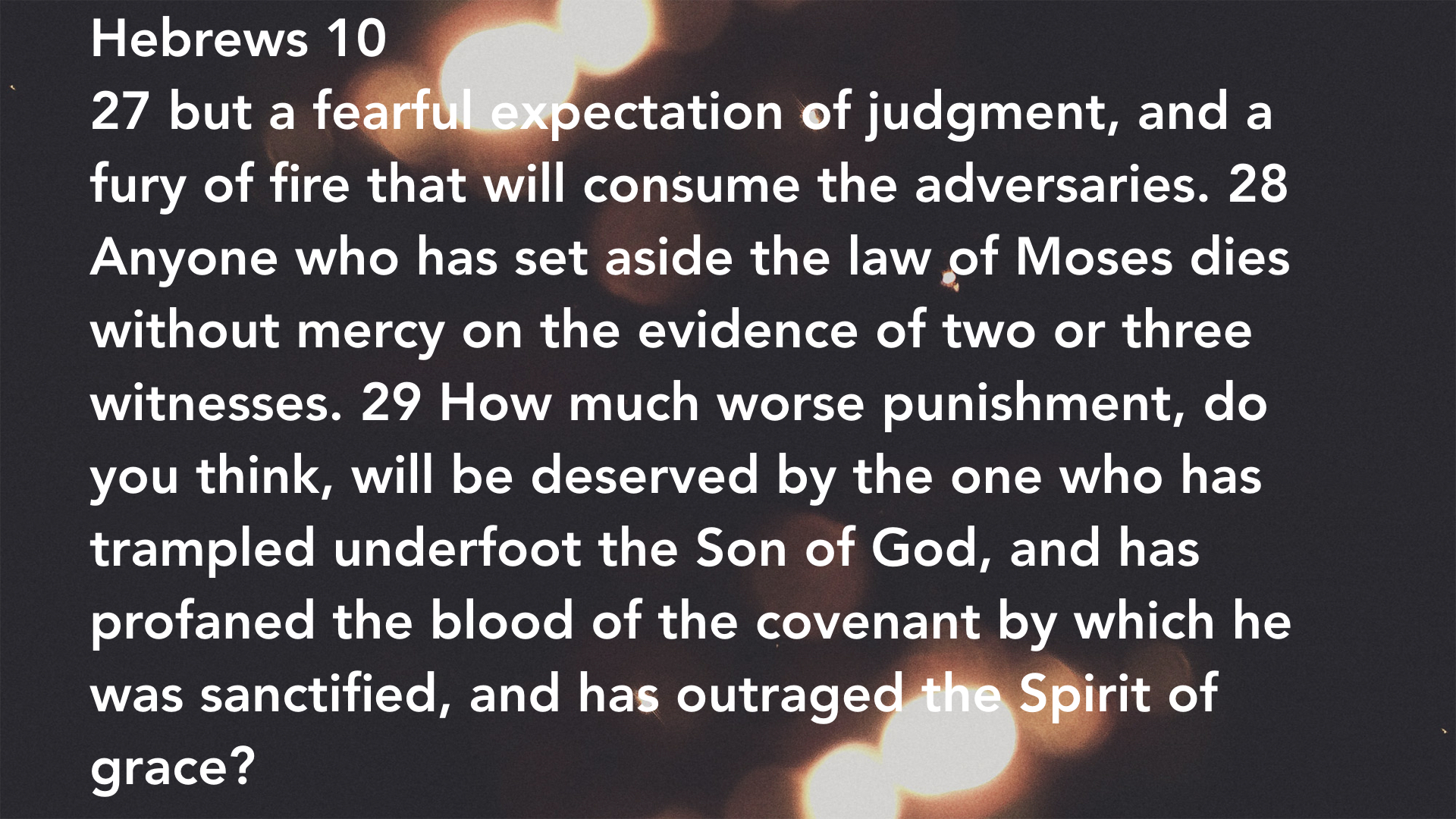
Hebrews 10:26 For if we go on sinning deliberately after receiving the knowledge of the truth, there no longer remains a sacrifice for sins, 27 but a fearful expectation of judgment, and a fury of fire that will consume the adversaries.
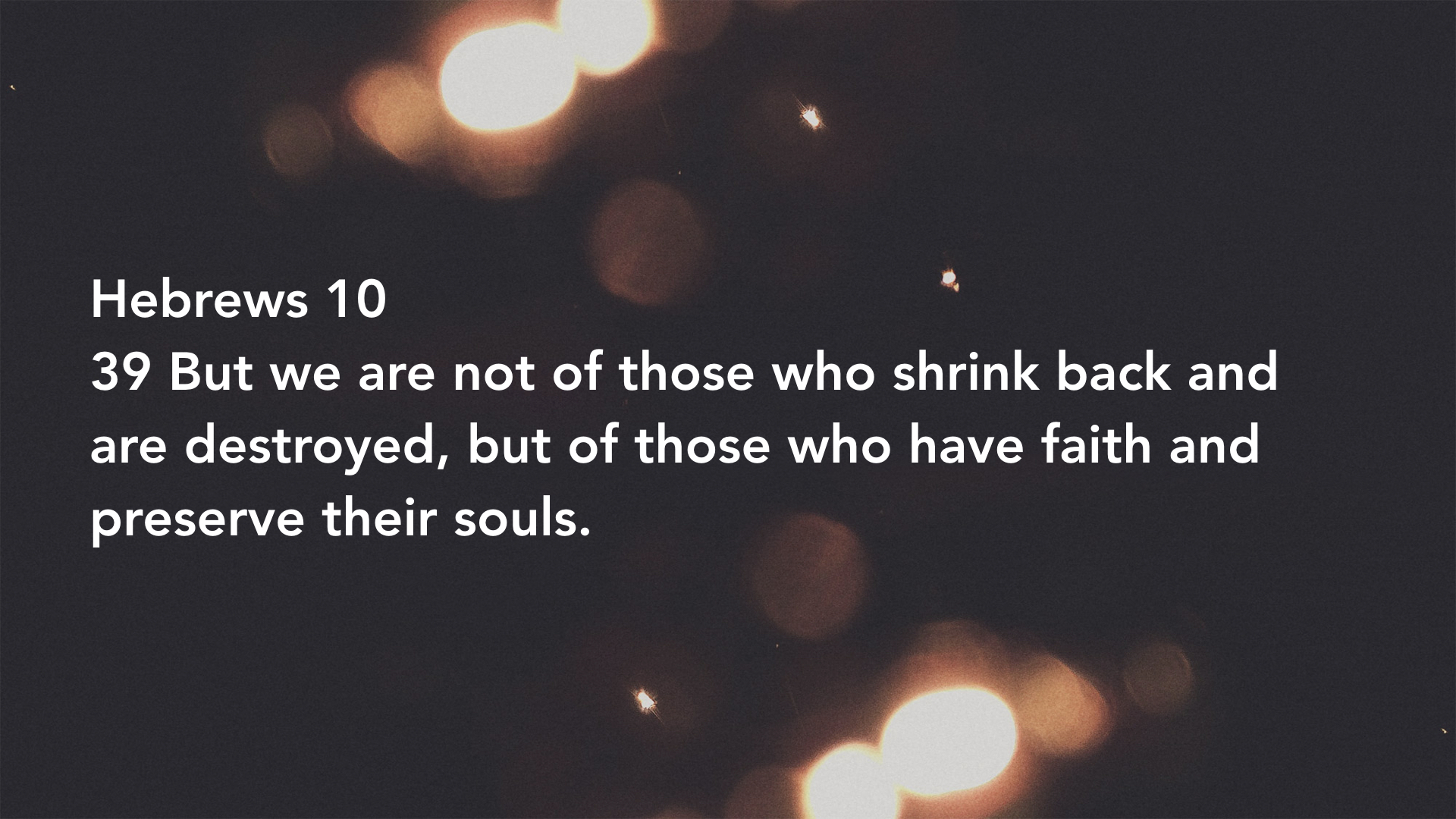
In context, he’s warning against disobedience/sin and defines it as drawing away from Jesus, back to animal sacrifices as their righteousness. He warns them to not set aside trust in Christ for their righteousness and likens it to setting aside the Law when they were under it.
This is not a warning to Christians about losing their salvation through willful sinful actions, this is a warning to Christians who are willingly rejecting Jesus as their righteousness and are returning to animal sacrifices as their righteousness.
Look at it this way, imagine walking up to God with a dead goat and saying, "this is my righteousness." He would kindly remind you that he gave you Jesus, which is a much better sacrifice, able to cleanse you eternally in a way that no animal sacrifice could. And you say, "I don't want him anymore, I reject his blood and want you to accept me based on this goats blood." Do you see how offensive that would be to God? That's profaning the blood of Christ, that's drawing away, that's an evil heart of unbelief, and THAT is the willful sin the author of Hebrews is talking about.
Because we don’t have a temple nearby and we don’t have hundreds of years of offering animal sacrifices for atonement in our culture, we miss the gravity of rejecting Jesus and returning to the blood of goats and bulls for atonement. An honest read on Hebrews leaves you with one conclusion, don’t reject Jesus, to do so is willful sin and there’s nothing left but judgment for you if you do so.


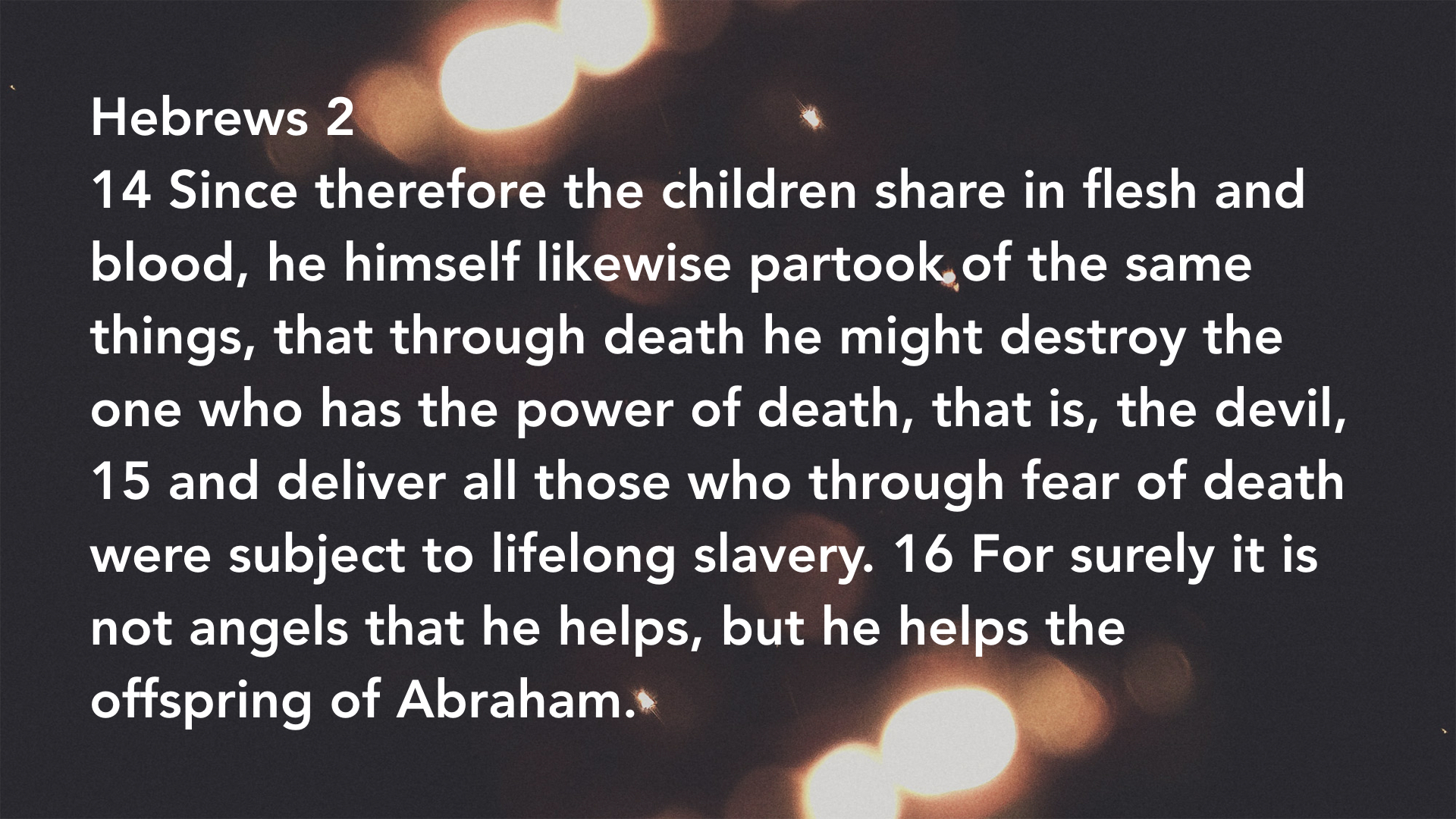
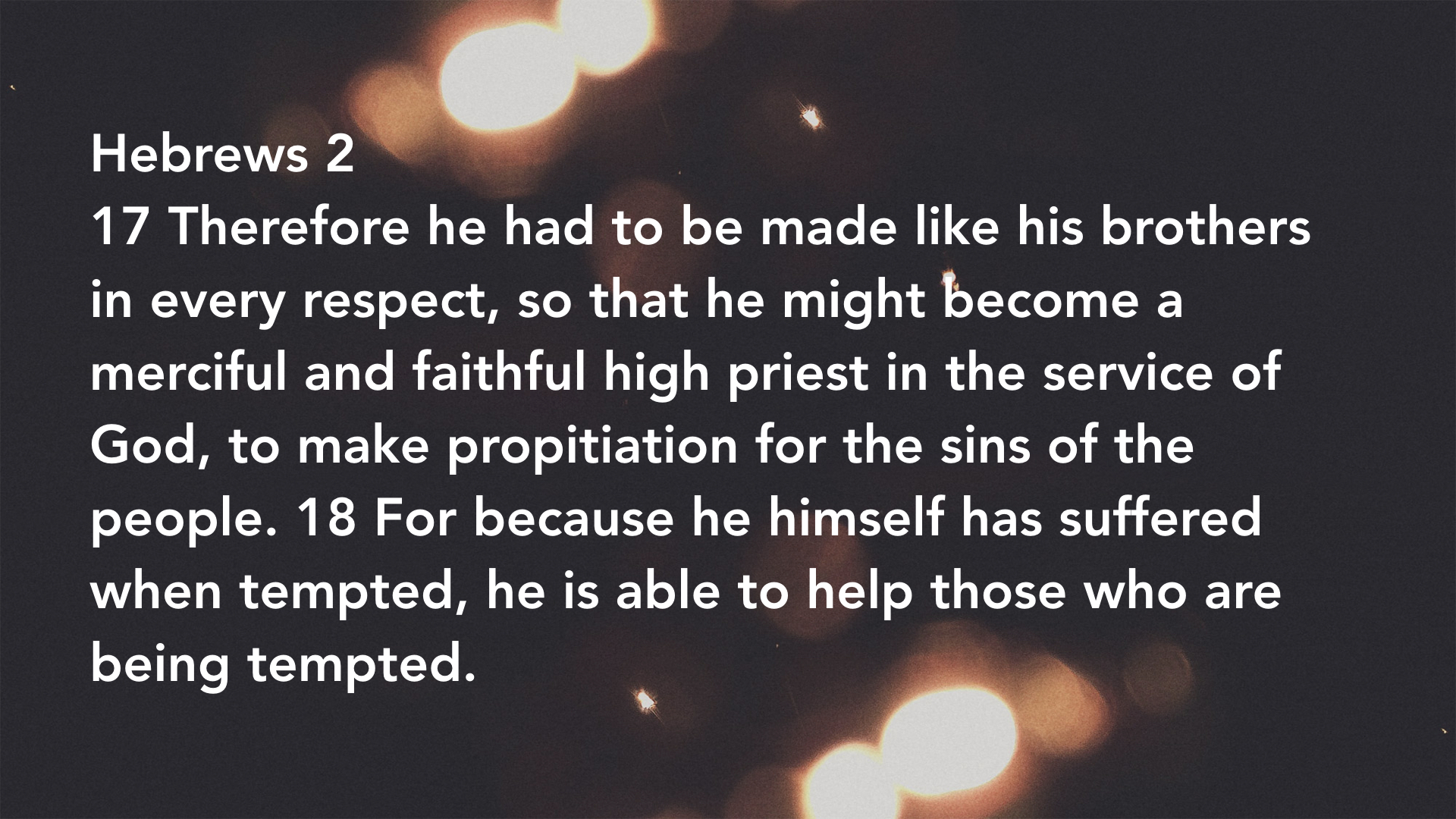

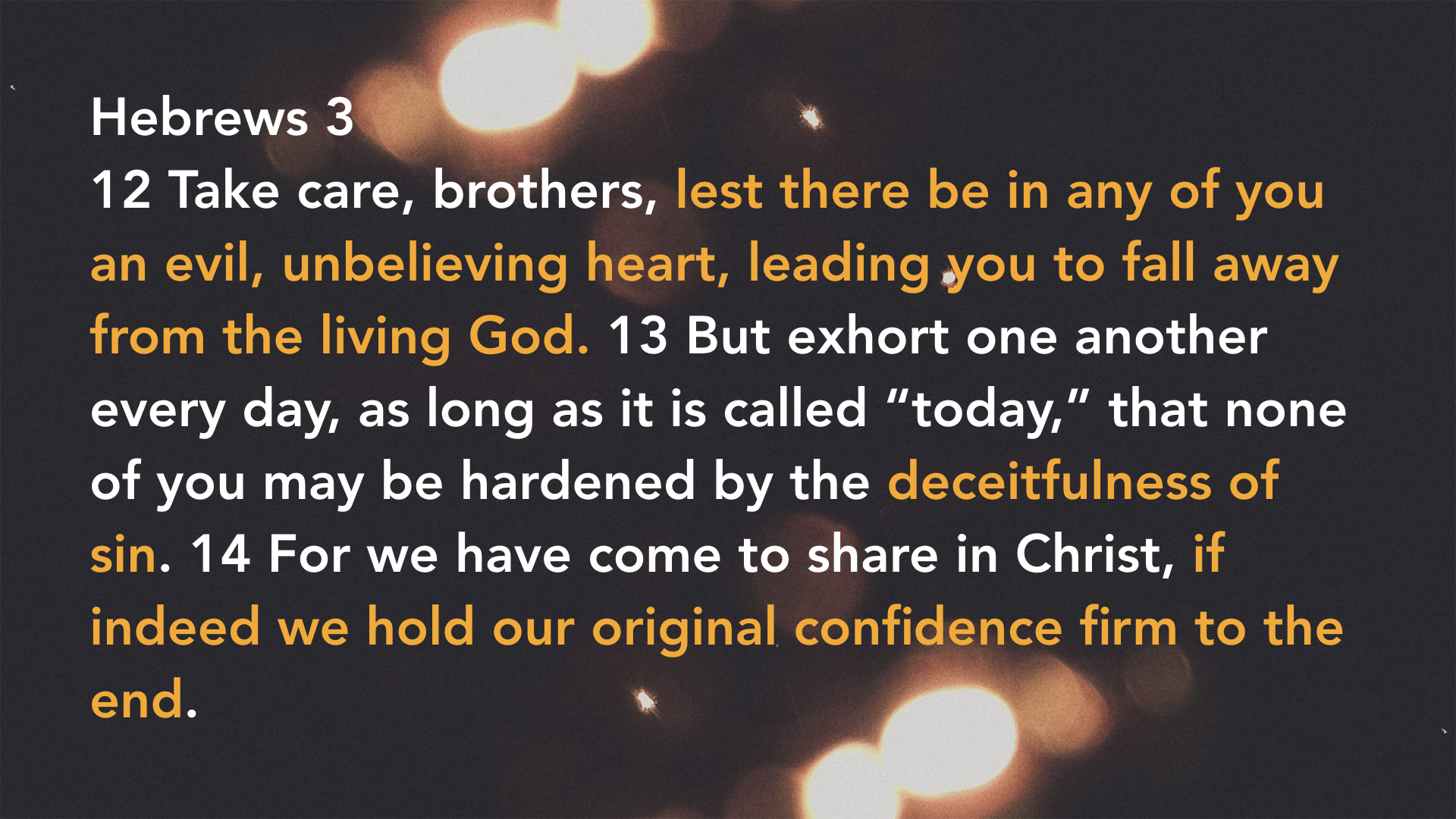
Browse my slides from this sermon
CONCLUSION
So, should we continue in sin since we can't lose our salvation through sinful actions? Nope, that's not a good idea. Don't sin!!! But if you do, remember that Jesus is your sacrifice for sin, turn your heart toward God in that area, allow his forgiveness to cleanse your soul from those evil desires and keep the faith!!
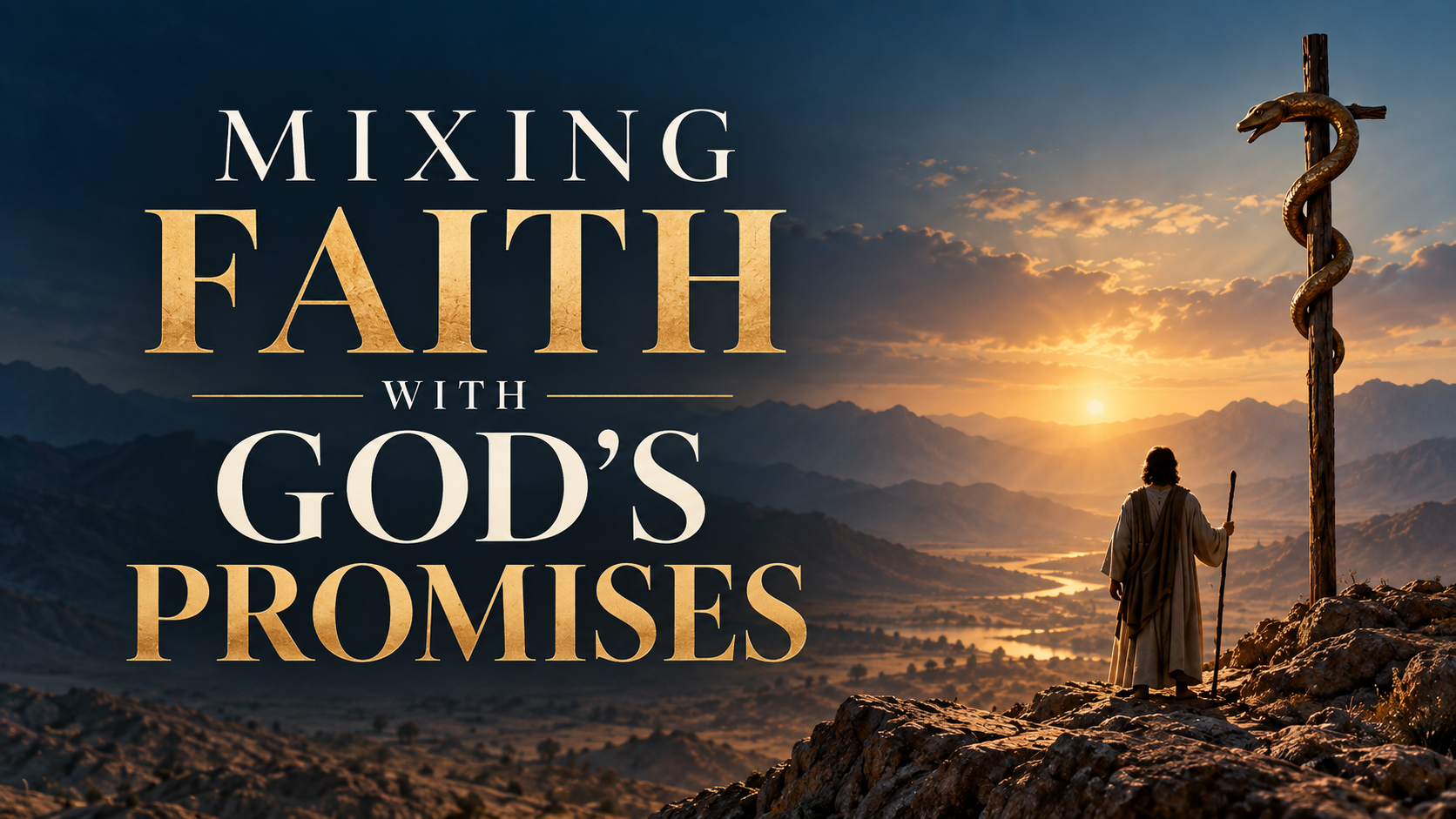







The Eternal Royal Grant New Covenant
When the Old Covenant prophets prophesied the New Covenant, they were declarations from God regarding what he would do for his people. He announces promises and blessings for those in this New Covenant. There is no curse outlined for breaking the New Covenant, only the possibility of missing out on the promises if they didn’t follow his instructions.
This article and sermon is #2 in God and Sinners Reconciled, read/watch #1 Understanding the Different Types of Covenants.
The Eternal Royal Grant Covenant
#2 in God and Sinners Reconciled
I asked last week if you knew there were different types of covenants; Kinship, Suzerain-Vassal and Royal Grant. This week I want to show you how the New Covenant can only be defined as a Royal Grant Covenant. The New Covenant is a promise to all who believe, and the promise is eternal life by faith alone. Here’s how we know.
When the Old Covenant prophets prophesied the New Covenant, they were declarations from God regarding what he would do for his people. He announces promises and blessings for those in this New Covenant. There is no curse outlined for breaking the New Covenant, only the possibility of missing out on the promises if they didn’t follow his instructions. It’s pretty simple but those points make it absolutely clear that the New Covenant, secured in Jesus’ blood, is a promise from God rather than a set of stipulations for qualification.
What did the Old Covenant say about the New Covenant?
I’m going to let the Bible speak for itself for most of this article. It’s very important to notice how the New Covenant is introduced. Keep in mind under a RGC there is no requirement or stipulations to receive the promises made by the sovereign/royal/king, it is a kingly grant. Here are the things to notice that validate the New Covenant as being a Royal Grant Covenant.
God makes claims about his authority and ability (as all kings do who enter into treaties/covenants)
God reminds his covenant partners what he has done for them
God makes promises he’ll keep under this covenant
Notice how many times he says “I will,” yet adds no “you shall’s”
Isaiah 54:7 For a brief moment I deserted you, but with great compassion I will gather you. 8 In overflowing anger for a moment I hid my face from you, but with everlasting love I will have compassion on you,” says the LORD, your Redeemer. 9 “This is like the days of Noah to me: as I swore that the waters of Noah should no more go over the earth, so I have sworn that I will not be angry with you, and will not rebuke you. 10 For the mountains may depart and the hills be removed, but my steadfast love shall not depart from you, and my covenant of peace shall not be removed,” says the LORD, who has compassion on you.
God identifies himself, he reminds them of what he’s done, he gives examples of his power, he gives an illustration of how sure his promise is, AND he lays out no stipulations.
Jeremiah 31:31 “Behold, the days are coming, declares the LORD, when I will make a new covenant with the house of Israel and the house of Judah, 32 not like the covenant that I made with their fathers on the day when I took them by the hand to bring them out of the land of Egypt, my covenant that they broke, though I was their husband, declares the LORD. 33 For this is the covenant that I will make with the house of Israel after those days, declares the LORD: I will put my law within them, and I will write it on their hearts. And I will be their God, and they shall be my people. 34 And no longer shall each one teach his neighbor and each his brother, saying, ‘Know the LORD,’ for they shall all know me, from the least of them to the greatest, declares the LORD. For I will forgive their iniquity, and I will remember their sin no more.”
All promises with no curses. And that part about not holding their sins against them…WOW!! To an Israelite, this must have been confusing and exhilarating. Their entire lives revolved around sin management. They had to wash themselves properly, eat certain things, live purely or face being stoned to death and bring the right kinds of offerings to the priests if they did slip up and sin.
Life for them was a constant awareness and safe guard against sin, now God was promising to not hold their sins against them? Surely this is indeed a covenant not like the one with their fathers! He does warn there can be destructive consequences from sinful actions but he will no longer punish them for their sins like under the former covenant.
Ezekiel 36:24 I will take you from the nations and gather you from all the countries and bring you into your own land. 25 I will sprinkle clean water on you, and you shall be clean from all your uncleannesses, and from all your idols I will cleanse you. 26 And I will give you a new heart, and a new spirit I will put within you. And I will remove the heart of stone from your flesh and give you a heart of flesh. 27 And I will put my Spirit within you, and cause you to walk in my statutes and be careful to obey my rules.a 28 You shall dwell in the land that I gave to your fathers, and you shall be my people, and I will be your God.
God takes his promises to another level through Ezekiel. Not only are there no curses, there are the usual promises like having their own land, but he adds something they had not heard before, he addresses their hearts.
Until now the God’s covenants offered promises like land, blessed families, children to carry on their families, protection from other nations and the blessing of the whole world through them. But now he’s talking about new hearts, being washed with pure water and his spirit living within them.
Hold the shepherd staff, what kind of promises are these? They had seen what God’s spirit does to people, it killed them, now he’s talking about placing his spirit WITHIN them? And washing them with water? In the Mosaic covenant they had to wash themselves, purify themselves, sanctify themselves…now God is going to do that for them?
YES!!!!!!!! It’s a Royal Grant, a promise that cannot be earned. This is another determining factor for classifying the New Covenant as a Royal Grant Covenant.
Under this New Covenant, God would wash them with water, what water is he talking about? We know now on this side of the cross that he’s talking about the washing of the water of the living word (Jesus) and the baptism of the Holy Spirit. You see, when you place your trust in Jesus as your righteousness, God cleans you thoroughly and completely, in a way like you never could for yourself. You cannot sanctify yourself enough to gain eternal spiritual life, despite what the learned theologian tells you. Sanctification, by God, is part of his promise to YOU!
God cleans you in such a way that it washes the very core of sin away and prepares you to receive a new, clean heart. God did for us what David prayed for, he gave us a clean heart. The “heart” in Hebrew understanding was the seat of man’s being, your true identity, the deepest place within you that defined your level of righteousness and holiness. God was promising to wash them, you, to such a degree that his very own spirit could dwell in them/you.
God can only dwell where it is holy. The original hearer of this prophecy would have understood that they were going to be made pure and holy to be a proper vessel for God’s spirit. This promise has come true for you, if you have said yes to Jesus.
The Announcement of the New Covenant
John 1:29 The next day he saw Jesus coming toward him, and said, “Behold, the Lamb of God, who takes away the sin of the world!
This is a reference to the promise that God would no longer hold their sins against them.
Luke 2:20 In the same way, after supper He took the cup, saying, “This cup is the new covenant in My blood, which is poured out for you.
Of course there are many more passages announcing the arrival of the Messiah and his promised covenant, we’ll leave it at these two and move on.
The Upholding of the New Covenant
Every covenant has a canon. The canon of the covenant is essentially documentation. Here’s what’s included in the canon of a covenant.
How the covenant partners came into relationship
The promises and curses of each covenant partner
The records of how the covenant unfolded
A record of the breaking of the covenant if applicable
You can think of Genesis 1-11 as the canon for Noah’s covenant, Genesis 12-50 is the Abrahamic covenant canon and the rest of the Torah is the canon of the Mosaic covenant. The New Testament is the canon of the New Covenant.
Here’s what the New Testament says about the unfolding and upholding of the New Covenant. Again, notice how the covenant is upheld, by Christ, not by the covenant partner keeping rules and stipulations.
The main promise of the New Covenant is clear, eternal life.
Romans 6:23 For the wages of sin is death, but the free gift of God is eternal life in Christ Jesus our Lord.
Justification or qualification to be a covenant partner in the New Covenant is by faith alone.
Galatians 2:15 We ourselves are Jews by birth and not Gentile sinners; 16 yet we know that a person is not justified by works of the law but through faith in Jesus Christ, so we also have believed in Christ Jesus, in order to be justified by faith in Christ and not by works of the law, because by works of the law no one will be justified.
The Apostle reframes those who inherit this covenant as people of faith. Paul went to war and insisted that the New Covenant was not just for Jews but also for Gentiles, and all who would believe.
Galatians 3:7 Know then that it is those of faith who are the sons of Abraham. 8 And the Scripture, foreseeing that God would justify the Gentiles by faith, preached the gospel beforehand to Abraham, saying, “In you shall all the nations be blessed.” 9 So then, those who are of faith are blessed along with Abraham, the man of faith.
Paul affirms again how one is qualified to be a covenant partner. The promised spirit he mentions is a reference to Ezekiel’s prophecy about this New Covenant. Paul is careful to explain that people inherit access into this new covenant through Jesus and not through law keeping.
Galatians 3:13 Christ redeemed us from the curse of the law by becoming a curse for us—for it is written, “Cursed is everyone who is hanged on a tree”— 14 so that in Christ Jesus the blessing of Abraham might come to the Gentiles, so that we might receive the promised Spirit through faith.
Jesus himself is our peace. Peace in this context means wholeness of relationship as a covenant partner. Jesus himself maintains our “side” of the covenant to keep us qualified for the covenant promises.
Ephesians 2:13 But now in Christ Jesus you who once were far off have been brought near by the blood of Christ. 14 For he himself is our peace, who has made us both one and has broken down in his flesh the dividing wall of hostility 15 by abolishing the law of commandments expressed in ordinances, that he might create in himself one new man in place of the two, so making peace, 16 and might reconcile us both to God in one body through the cross, thereby killing the hostility.
This next one is a reference to God’s promise of not holding our sins against us, Jesus took care of that for us too.
Romans 8:3 For God has done what the law, weakened by the flesh, could not do. By sending his own Son in the likeness of sinful flesh and for sin, he condemned sin in the flesh, 4 in order that the righteous requirement of the law might be fulfilled in us, who walk not according to the flesh but according to the Spirit.
The promise of the new covenant is eternal life. The way you “stay qualified” is you keep believing.
1 John 2:23 No one who denies the Son has the Father. Whoever confesses the Son has the Father also. 24 Let what you heard from the beginning abide in you. If what you heard from the beginning abides in you, then you too will abide in the Son and in the Father. 25 And this is the promise that he made to use—eternal life.
We see in the next passage that we are saved or given eternal life not by our own works but through mercy, a gift from God. The reason I’m showing you all these passages is to reinforce the idea that the New Covenant that you are under is absolutely a Royal Grant covenant. It’s all promises and no curses. It’s an unconditional gift. If you trust the sovereign and his path of inheritance, faith in Christ, you receive the promise, eternal life.
Titus 3:4 But when the goodness and loving kindness of God our Savior appeared, 5 he saved us, not because of works done by us in righteousness, but according to his own mercy, by the washing of regeneration and renewal of the Holy Spirit, 6 whom he poured out on us richly through Jesus Christ our Savior, 7 so that being justified by his grace we might become heirs according to the hope of eternal life. 8 The saying is trustworthy, and I want you to insist on these things, so that those who have believed in God may be careful to devote themselves to good works. These things are excellent and profitable for people.
And finally…
Hebrews 9:11 But when Christ appeared as a high priest of the good things that have come, then through the greater and more perfect tent (not made with hands, that is, not of this creation) 12 he entered once for all into the holy places, not by means of the blood of goats and calves but by means of his own blood, thus securing an eternal redemption.
God himself, through Jesus Christ, promised, initiated, enacted and upholds the better, eternal covenant of peace that offers the promise of eternal life for all who believe.
Your salvation is secure in Jesus. You are an heir of a promise from God that is received one way and one way only, through faith. Rest in this powerful, life giving truth and never again question your salvation, for it is a promise to be freely received, not a reward to be earned.
Post Your Comments

Understand the Different Kinds of Covenants
God makes covenants. They’re important to him. You probably knew that. But did you know there are different kinds of covenants? Understanding the different kinds and knowing which kind of covenant you’re now in is liberating and possibly life changing for you.
God makes covenants. They’re important to him. You probably knew that. But did you know there are different kinds of covenants? Understanding the different kinds and knowing which kind of covenant you’re now in is liberating and possibly life changing for you.
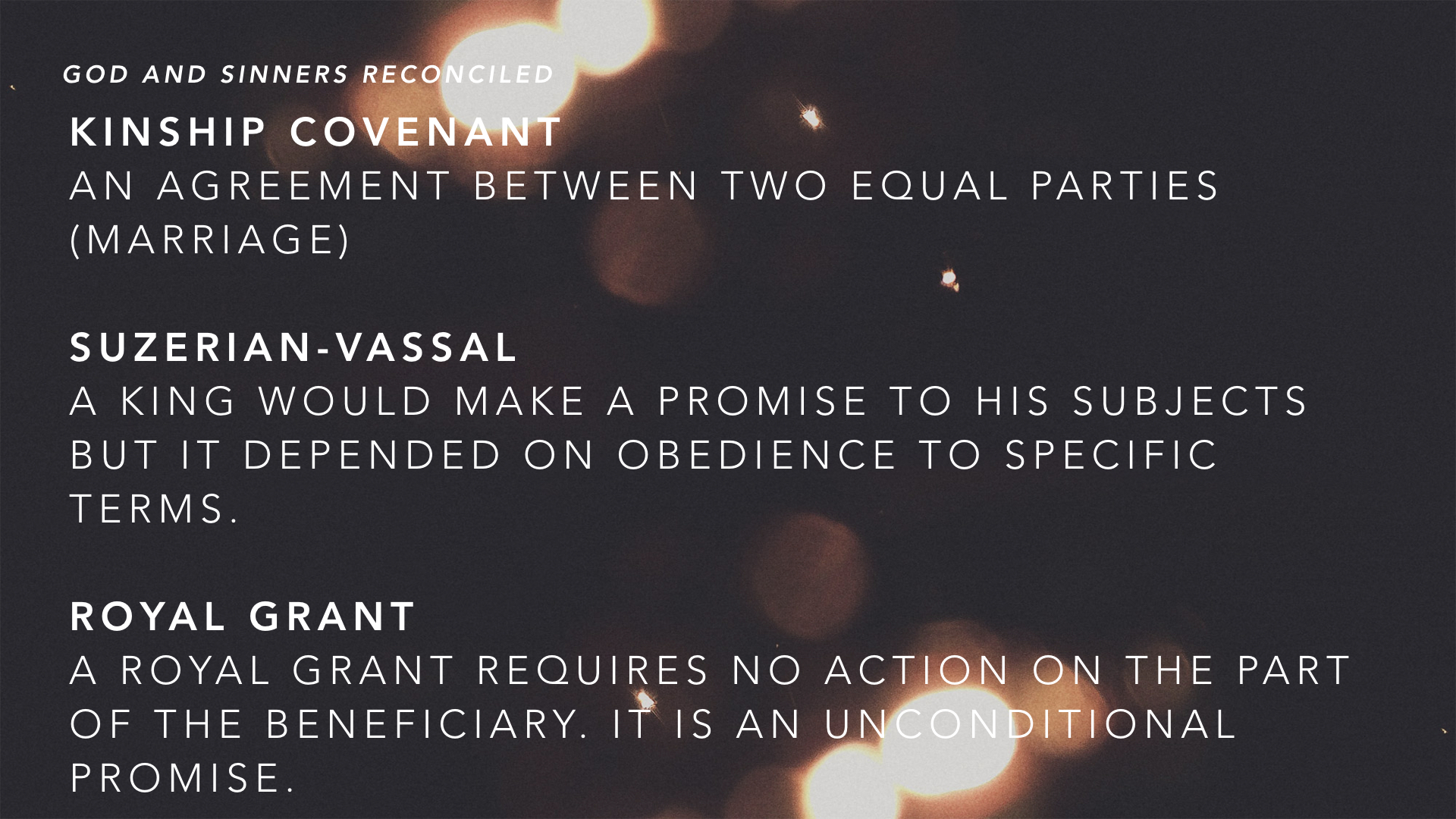
A covenant is a binding agreement between two or more parties. There are 3 kinds of covenants.
Kinship
Suzerain-Vassal
Royal Grant
Kinship: An agreement between two equal parties with a few stipulations or requirements. Marriage, selling property, business agreement...
Suzerain-Vassal: A king would make a promise to his subjects, or a treaty between kings would be that depended on obedience to specific terms. You can think of this covenant as a conditional promise.
Royal Grant: Unlike the Suzerain-Vassal agreements, a Royal Grant requires no action on the part of the beneficiary. It is an unconditional promise given from one party to another. The only down side to a Grant covenant is missing out on promises.
Who had what?
Noah, Abraham and Jesus have Royal Grant Covenants from God. Moses and the nation of Israel were in a Suzerain-Vassal Covenant.
God’s Covenant with All Mankind
The first covenant God made that isn’t mentioned much was the covenant he made with Adam and subsequently all mankind. He gave mankind dominion over the planet for a period of time. This covenant is the reason the world is in its current condition. God could fix everything with the snap of his fingers, but he would be breaking his covenant for mankind to rule over the earth.
Noah’s Covenant
We see Noah’s covenant with God in Genesis 9:11
“I establish my covenant with you, that never again shall all flesh be cut off by the waters of the flood, and never again shall there be a flood to destroy the earth” ~ God
There is no requirement in a Grant Covenant, just a promise from God. All Noah had to do was believe God and follow instructions. Noah could take it to the bank that the earth would never agin be flooded by God. It may have taken him a while to become confident with that promise, given that one time it rained for 40 days and 40 nights, but God held true to his word, no more flooding the earth.
Abraham’s Covenant
We see Abraham’s Royal Grant Covenant decreed by God in Genesis 12:1-3.
“Now the Lord had said to Abram: ‘Get out of your country, from your family and from your father’s house, to a land that I will show you. I will make you a great nation; I will bless you and make your name great; and you shall be a blessing. I will bless those who bless you, and I will curse him who curses you; and in you all the families of the earth shall be blessed.’”
There are no requirements, just promises from God that Abraham had to believe. Believing also meant following instructions, but if you’ll recall, there were no curses outlined if Abraham didn’t follow God’s leading. He would have missed out on blessings had he not trusted God, but no curses were decreed.
God asked him to leave Ur, leave his nephew Lot and promised him a son. What did Abraham do? Waited 10 years to leave, took Lot with him, then gave his wife away to a foreign king. You can’t miss it much more than that, he did the exact opposite of God’s instructions.
Yet what did God do to Abraham? Continued to stay faithful to him. Did he curse or punish him? No! In fact, he protected him from his mistakes by afflicting Pharaoh. God protects and defends his covenant partners regardless of the kind of covenant.
Despite his failures, Abraham continued to trust that God would follow through with his promises. This is what allowed him to receive the blessing of God’s Royal Grant Covenant…faith. He trusted in God’s character, even though he tried to do things his own way a few times. I don’t know about you but that’s encouraging to me.
Right about now you have to be seeing similarities between Abraham’s covenant and the New Covenant, more on that in a bit.
What about Isaac?
This is a rabbit trail but let me address Isaac for a moment since you’re probably thinking about the incident on the mountain top. God had already promised to bless Abraham and the nations of the earth through his lineage. He already protected him several times. God gave Abraham a son from his own wife. Promises kept in spite of Abraham’s lack of obedience. Which leads us to God’s request to sacrifice Isaac.
God did not ask Abraham to kill his son so Abraham would be qualified for the promises of the covenant.
Actually, we don’t really know why God asked him to do that. The only reason we can gather is in Genesis 22 when an angel says, “now we know you fear God.” That’s it. After Abraham is willing to sacrifice Isaac, God merely promises to do what he’s already doing, bless him, his family and all the nations of the earth through him. He was already doing that. The moral is not that God will bless you if you pass the test, the moral is, keep trusting God.
Personally, I think God did that as a heart check for Abraham, to make sure he was trusting in God more than his own efforts. I also think it was done to give us insight into God’s heart for mankind, what he would follow through with one day for the whole world in Jesus.
Mosaic / Nation of Israel Covenant
This is a Suzeriav-Vassal Covenant. This is the covenant we refer to as the Old Covenant, the one that the Apostle Paul said was obsolete. This is the covenant that the Jewish Christians wanted to impose on Gentile believers and caused so much division and confusion for the early church.
This covenant demanded obedience to receive blessings and detailed curses for lack of obedience. The Law, which began with the 10 Commandments, is part of the Mosaic Covenant. Jesus fulfilled every single requirement of that covenant and he reaped the penalty/curse for the breaking of it. He himself didn’t break any aspect of the covenant but he took the curse as a sacrificial lamb for all mankind. His accomplishment broke the hold of that covenant over any and everyone.
The Better Covenant
In Jesus, a New Covenant is offered for all who will believe in Christ. Abraham had to believe in God’s promise of a child, we have to believe in the promise of Christ.
The prophets Jeremiah and Ezekiel both announced the coming of a new covenant. It was announced as a Royal Grant Covenant that only had promises. The promises were very unique, they were not just promises for this life but also for the life to come, an eternal life.
The Royal Grant decree included these initial promises:
I will no longer hold your sins against you
I will give you a new heart
My laws will not be written in stone but in this new heart
I will place my spirit within you
To a Jew, these were extremely profound. The Mosaic Covenant was all about holding their sins against them. There was a priesthood set up specifically for the atonement of sins. They managed their finances to afford the proper kinds of sacrifices related to their sins. The knew their ancestors that were delivered from Egypt wandered in the desert longer that necessary because of the sin of not trusting God form the heart.
Living in the time we do, it’s hard to understand what it was like to live under that kind of covenant. Let me give you an example…
If Abraham had been under a Suzerian-Vassal covenant, he may have wandered in the desert on his way to Canaan as well. We know the Israelites didn’t enter in because of their unbelief, what if Abraham was kept from inheriting his promises all those times he displayed unbelief or disobedience; taking Lot with him, giving his wife away, having a child with another woman…
Fast forward to the New Covenant and apply the same logic. If it were up to us to uphold our end of a covenant that carried the promise of eternal life through perfect living, we all would fail. All have sinned and fallen short of the glory of God, which is required for eternal life. In no way, shape or form could anyone expect to keep a covenant full of laws and rules to live forever.
The New Covenant is a Royal Grant Covenant. There are no curses associated, only the loss of promises if you don’t believe.
Jesus backs up the fact that the New Covenant is a Grant through the parable of the sower. He explains in detail how the condition of the heart of the hearer determines the degree of the realm of promise (Heaven) they will experience in this life. By placing his spirit within us as a down payment for the eternal blessing we will receive one day, he gives us rights to that eternal life now.
We all know that once you make a down payment on a house, you get to move in. Our down payment has been paid to be able to move into Heaven. One day we’ll own it fully but we currently have full access to the home itself. Why? Because that’s how God set it up, it’s a Grant Covenant, with all blessings and no curses.
I pray that you don’t miss out on the opportunity to experience the blessings of God’s gracious decree in Christ in this life or in the life to come.
Final Thought
Since the better covenant is partly spiritual in nature, promising eternal life, a spiritual man must uphold the covenant. No mere human is capable of such a feat, so God himself became a human. God limited himself in every way to become human. As a human he kept all the requirements for every covenant God ever decreed. He bore the curse for mankind breaking any and all covenants. And he overcame the strongest penalty of the curse, which is death. Now, Jesus himself upholds this eternal, spiritual covenant for all who will place their trust in him. The news gets even better, we can enjoy many great and precious promises of this New Royal Grant Covenant here and now, so that we will be partakers of God’s eternally glorious and divine nature, in Christ!!!
Discussion Ideas
How does it change your thinking to know you’re in a Royal Grant Covenant?
What does it mean to be “in Christ?”
What promises do you know of that are available in the New Covenant?