Don't Let COVID Steal Your Dreams
How much power have we given to COVID to keep us from doing the things we know God has called us to do? I don’t want to beat you up, I want to encourage you to consider moving forward. Don’t neglect your gift, use it to serve, and find a way to use it now.
“Use whatever gift you have received to serve.” This reminds me of Moses. God called him, and Moses tried to disqualify himself multiple times. When he started to become open to following God, he asked God how he was supposed to accomplish what God was asking him to do. God said, let’s start with what’s in your hands.
“Each of you should use whatever gift you have received to serve others, as faithful stewards of God’s grace in its various forms. If anyone speaks, they should do so as one who speaks the very words of God. If anyone serves, they should do so with the strength God provides, so that in all things God may be praised through Jesus Christ. To him be the glory and the power for ever and ever. Amen.”
How much power have we given to COVID to keep us from doing the things we know God has called us to do? I don’t want to beat you up, I want to encourage you to consider moving forward. Don’t neglect your gift, use it to serve, and find a way to use it now.
“Use whatever gift you have received to serve.” This reminds me of Moses. God called him, and Moses tried to disqualify himself multiple times. When he started to become open to following God, he asked God how he was supposed to accomplish what God was asking him to do. God said, let’s start with what’s in your hands.
As you know, Moses had a shepherd’s staff in his hands, and God glorified himself through it. He wants to do the same through whatever is in your hands.
Many of you have passions, callings, and dreams that are on hold because of COVID-19. I have spoken with many people who seem to be waiting on following God until COVID blows over. I always ask them why they’re waiting on COVID. The answer usually has something to do with not knowing what is acceptable. Most people want to be respectful of others, but our response has rendered us ineffective for the Kingdom.
I understand not wanting to cross other people’s boundaries, but you can’t allow the way the world responds to this virus to keep you from following God’s calling on your life. Life goes on, your call remains, it may be time to consider how you can move forward. Don’t let COVID steal your dreams. Quit waiting to do those things you know God has called you to do.
I encourage you to watch the video above and follow along as I read through this passage from 1 Peter.
1 Peter 4:8 Above all, love each other deeply, because love covers over a multitude of sins. 9 Offer hospitality to one another without grumbling. 10 Each of you should use whatever gift you have received to serve others, as faithful stewards of God’s grace in its various forms. 11 If anyone speaks, they should do so as one who speaks the very words of God. If anyone serves, they should do so with the strength God provides, so that in all things God may be praised through Jesus Christ. To him be the glory and the power for ever and ever. Amen.
What a powerful and holy assignment we carry, we speak for God, and we do so in His power. God will give you the strength to do those things you want to do but don’t know how to do. That strength is His grace in your inner man. This weekend I begin a new series on God’s grace. I want to focus on how you can lean into His grace and increase the capacity of your heart to experience His supernatural strength in every aspect of your life.
Join me on Facebook or YouTube, Sunday mornings at 10 am EST.
Please consider becoming a supporter of Forward Ministries.

God Wants to Save People, Not Reject Them.
God wants to save people, He is not looking for a reason to reject people. He is not looking for a reason to reject you. He did everything He could to remove the things He had against you in the sacrifice of Christ, to make life with Him secure by faith rather than works.
BUT
He does seem to give us a warning in Hebrews. I’ll cut to the chase, the warning is; don’t reject Jesus and go back to Old Covenant sacrifices. Yes, that’s the “willful sin” the author of Hebrews warns about, rejecting Jesus and trusting in the blood of goats and bulls rather than Christ.
Now, you don’t have a temple to take your goat to, but you do have your dead works that you think make you clean again with God (more on this in the sermon). Jesus’ lifeblood cleanses you, and God’s circumcision of your old nature makes you new. That alone is your righteousness and your removal of sin.
Can You Lose Your Salvation?
I recommend watching the sermon above for a much more detailed explanation, but the short answer is this; you didn’t earn your salvation through works, you can’t lose it through works. And it’s not your works that keep you saved. The lifeblood of Jesus and His finished work on the cross save you and keep you saved. Period, end of story.
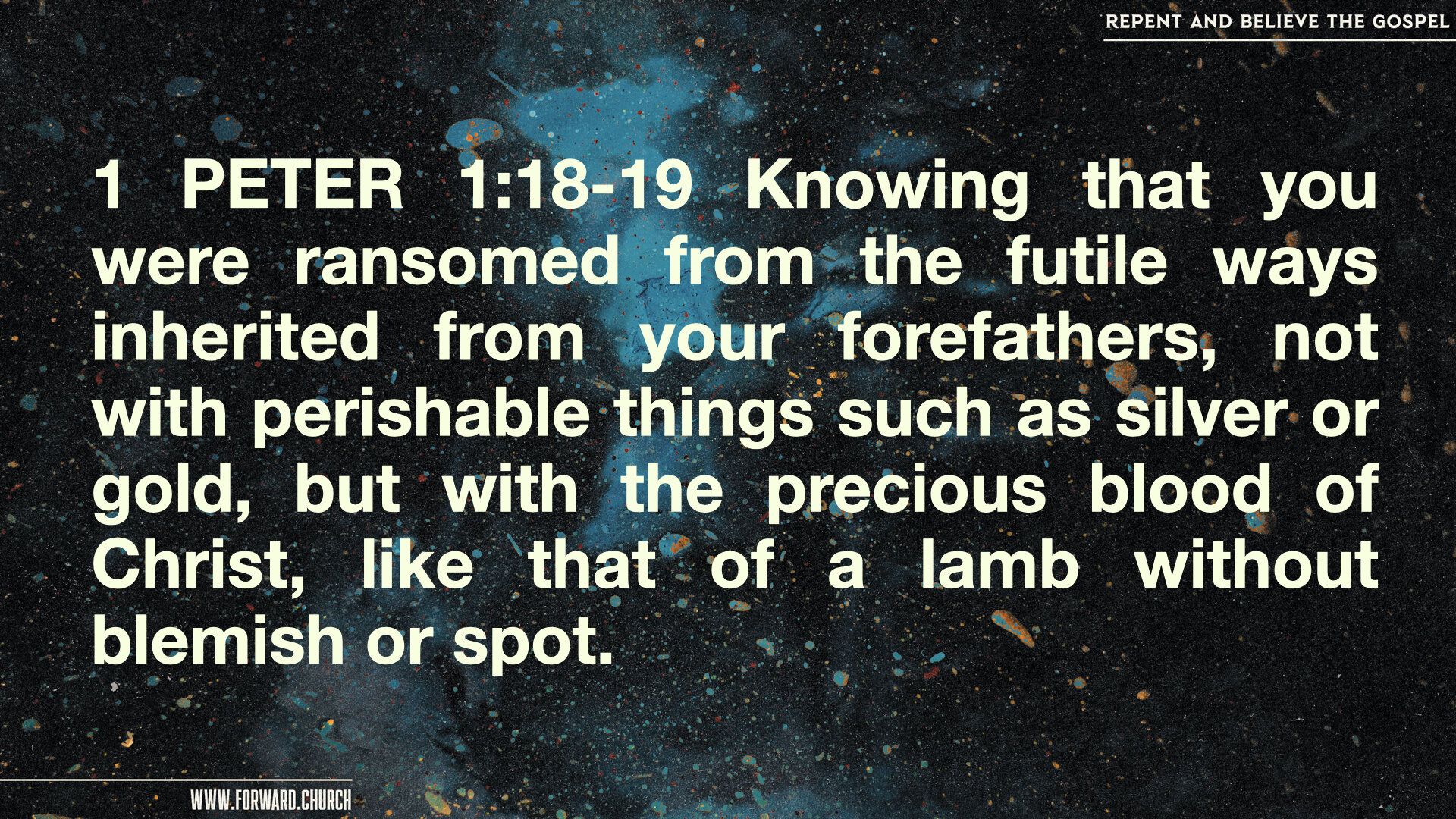
But some passages need to be addressed, such as Hebrews 10:26 For if we sin willfully after we have received the knowledge of the truth, there no longer remains a sacrifice for sins, 27 but a certain fearful expectation of judgment, and fiery indignation which will devour the adversaries.
What do we do with this passage? We put it in the proper context.
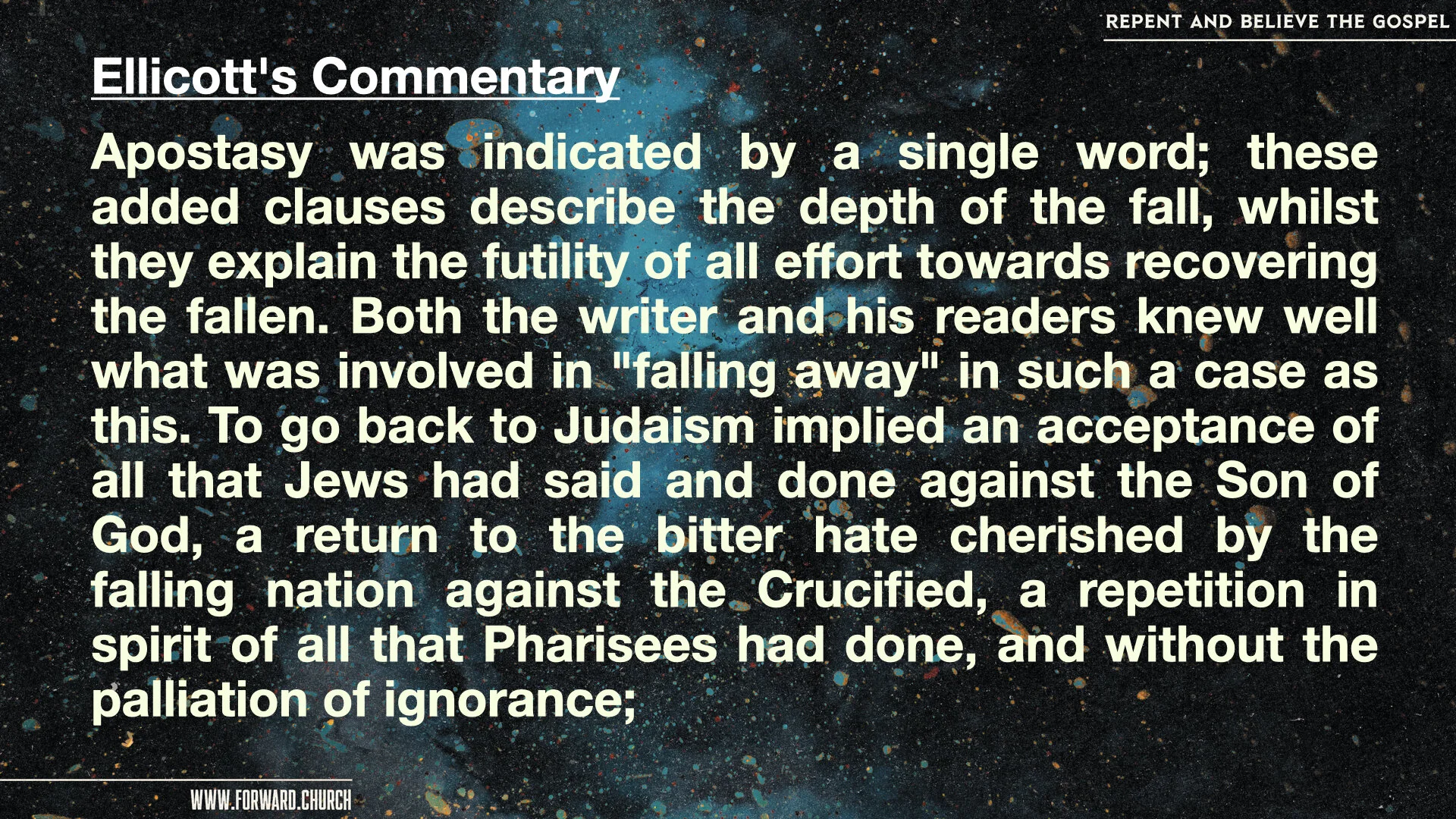
Apostasy was indicated by a single word; these added clauses describe the depth of the fall, whilst they explain the futility of all effort towards recovering the fallen. Both the writer and his readers knew well what was involved in "falling away" in such a case as this. To go back to Judaism implied an acceptance of all that Jews had said and done against the Son of God, a return to the bitter hate cherished by the falling nation against the Crucified, a repetition in spirit of all that Pharisees had done, and without the palliation of ignorance; for the highest evidence for Christianity--that of true and deep Christian experience--had been given to them. Again, the words used clearly describe a continuing state. Not the punishment for a past act, but the hopelessness of an existing state, is brought before us here. It is therefore of those who, with a distinct conviction of the divine mission of Jesus, have deliberately joined His foes, unite in denouncing Him as a "deceiver" (Matthew 27:63), rejoice in His shame, and thus "for themselves crucify a second time the Son of God," that the writer says, "It is impossible to renew them again unto repentance."
from Ellicott’s Commentary
The author of Hebrews is speaking to a persecuted church. Some of them were wary of the persecution and questioned the true identity of Jesus. Many of them chose to reject Jesus and resume animal sacrifice for the atoning of their sin. Imagine that you go to God will a dead goat and say, “this is my righteousness. I reject the blood of Jesus and choose to bring you the blood of this goat as my righteousness.” Doing that is like unjustly crucifying the Lord again.
That’s the warning in Hebrews 6 and 10. Continue trusting in Jesus rather than rejecting him and going back to Old Covenant sacrifices. It’s actually straightforward to understand, but some preachers love to scare people out of sin, so they misinterpret what’s being said.
Please watch the full sermon for much more on this topic.
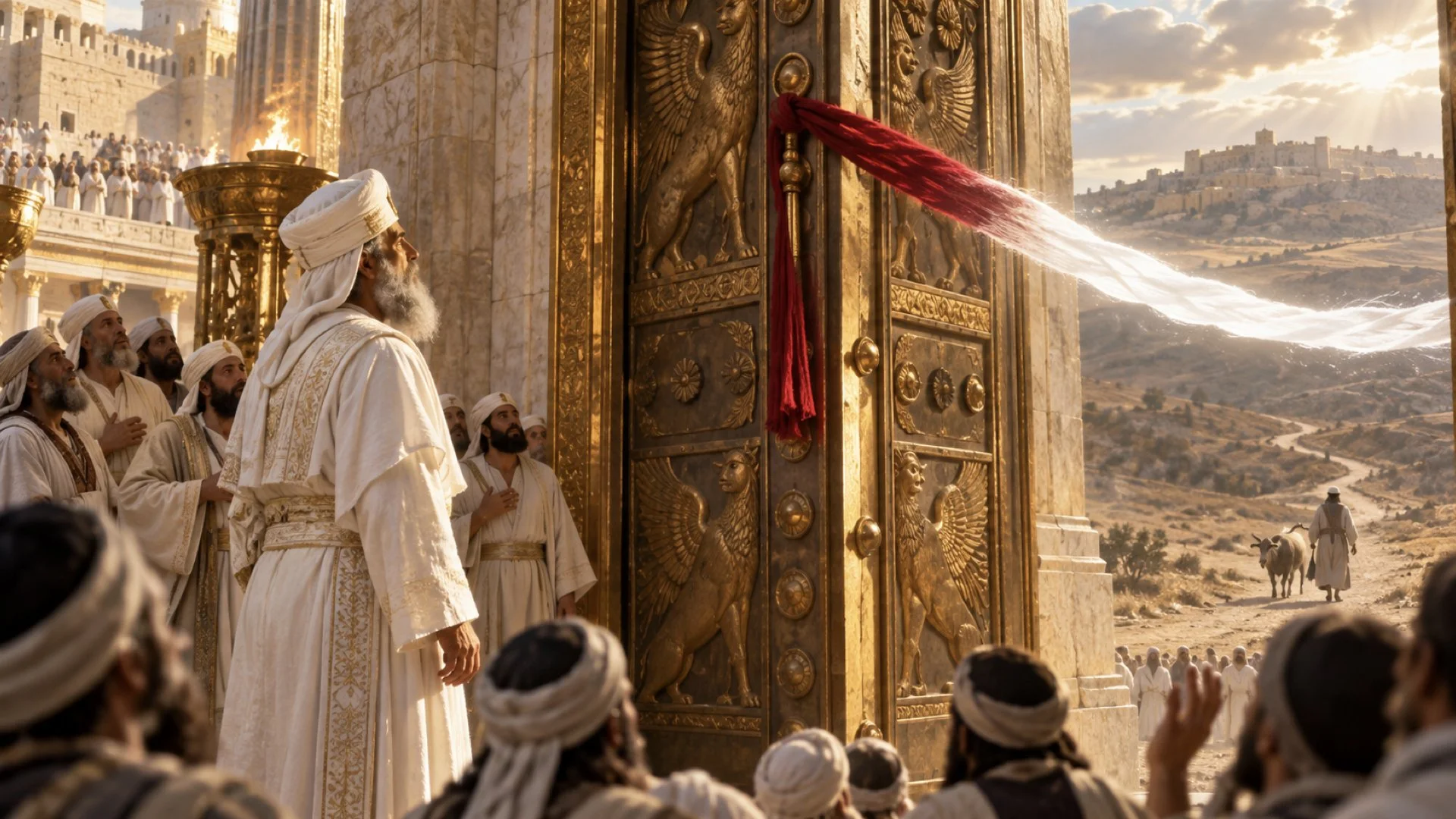
Discover how Yom Kippur and its ancient sacrifices foreshadowed the eternal redemption Jesus accomplished through His blood, removing our sinful nature, making us holy, and transforming us into the dwelling place of the Holy Spirit.
Hearing God becomes clearer as you know His character, renew your mind with His Word, and become established in who you are in Christ. As your inward beliefs come into agreement with your new identity, you become more sensitive to the Spirit’s leading and more confident in recognizing God’s voice in everyday life.
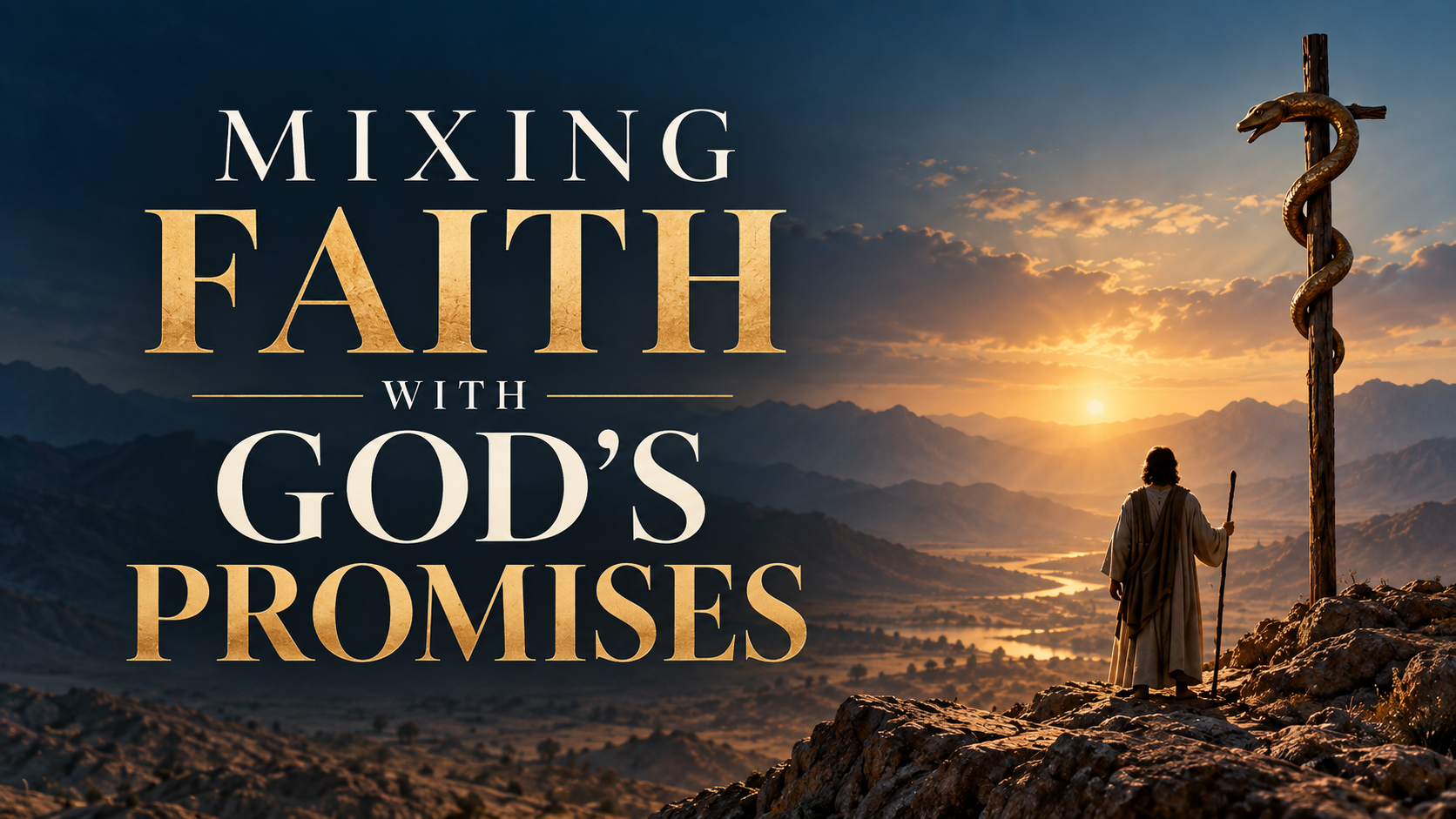
What you focus on shapes what you see, and when you continually complain about what’s wrong, you can become blind to God’s provision and even begin to loathe the manna at your feet. Instead of letting the snakes of life consume your attention, mix God’s promises with faith, keep your eyes on Jesus, sow gratitude, and let love—not spiritual elitism—be the true measure of your maturity.
What if the biggest thing standing between you and God's purpose isn't a lack of faith, but a life filled with distractions? Discover how renewing your mind with God's wisdom prepares you to recognize the divine opportunities He places in front of you every day—and to respond with confidence instead of hesitation.
When you live focused on what’s wrong—complaining, rehearsing what you lack, and overlooking the grace already in your life—the snakes of life will eventually come for you as you begin to reap the fruit of that perspective. But just as Israel looked at the bronze serpent and lived (Numbers 21:8–9), Jesus tells us to look to Him and believe (John 3:14–17), allowing the cross to turn our eyes from what’s wrong to the One who has already provided our salvation, healing, and transformation.
Attending Pete's funeral reminded me that the Church is at its best when it feels like family, where people are deeply known and genuinely loved. When we love one another the way Christ has loved us, we give the world a reason to say, "I want to be part of that family."
The cross is the lens everything else should be filtered through, and your real fight is usually with a destructive thought loop, not an outside force — so when a hard thought hits, name it and replace it with truth (rejection with acceptance, guilt with forgiveness, shame with grace). Isaiah 53 spells out that trade in detail, showing how his suffering directly answers your specific struggles. And don't keep asking "what's wrong with me" — your mind finds whatever evidence you keep hunting for, so choose to see your same circumstances through a hope-filled lens instead.
A mystical placebo is any ritual, special anointing, or spiritual condition inserted between you and what Christ has already provided — and like a sugar pill in a clinical trial, it can appear to work because your faith and expectation finally had somewhere to land, not because the ritual itself had any power. The trap is that you walk away dependent on the mechanism instead of the source, endlessly chasing the next evangelist, the next formula, or the next loophole to unlock what Jesus already paid for in full. Mature faith cuts through all of it — rooted in the finished work of Christ, it simply recognizes that healing, freedom, and abundant life aren't rewards you earn through the right spiritual steps, but a reality you receive by becoming fully persuaded that he who promised is faithful.
Through the death, burial, resurrection, and Pentecost, God made it possible not only to forgive us but to remove our old sinful nature, give us a new heart, place His Spirit within us, and make us new creations in Christ. Because God's Spirit now lives in us, we are no longer victims of our thoughts but have the ability to bring every thought captive and evaluate it in light of what Jesus accomplished through His obedience on the cross. Lasting transformation happens when we consistently replace thoughts that contradict the Gospel with the truth of who God is, what Christ has done, and who we now are in Him.
A deep dive into declassified FBI “Flying Disc” files reveals a strange mix of military reports, civilian sightings, alleged crash recoveries, and growing public fear during the late 1940s. The documents show that while many reports were likely explainable, the FBI and military still took the phenomenon seriously enough to investigate, catalog, and quietly coordinate responses across the country.
A healthy mother creates a healthy atmosphere. In this heartfelt Mother’s Day message, Pastor Clint Byars shares personal stories, biblical encouragement, and practical wisdom on emotional health, identity in Christ, parenting from peace instead of fear, and why your children need you grounded, stable, and thriving in your relationship with God.
Trials are a real part of life, but James makes it clear that they are not from God—using the same Greek word in James 1:2 and 1:13 to show that while we face them, we must never attribute them to Him. God works in us inwardly, testing and strengthening our hearts, but external trials come from living in a fallen world, not from His hand. Because of that, you can rest in His goodness, stop blaming Him for hardship, and confidently trust that in every trial, He is faithful to provide a way out.
If you don’t experience what Jesus went through for you, you’ll never fully live in what He’s offering to you. Psalm 22 gives us a prophetic window into the suffering of Christ—not just what happened, but what He felt—so that when you see it personally, grace becomes real, freedom becomes natural, and His resurrection life begins to flow through you.
What if the issue isn’t whether God is willing—but whether we actually know what’s been freely given to us?
Prayer is not asking a distant God to respond while you wait and wonder what He’ll do. It’s becoming aware of what He has already said, what Jesus has already finished, and what is already yours in Christ. Most of us start from the problem—what we see, what we feel, what isn’t changing—but real prayer begins from a different place: Christ in you, the hope of glory.
What if the issue isn’t whether God is willing—but whether we actually know what’s been freely given to us?
Prayer is not meant to be a fearful attempt to convince a distant God to care. It is a relational response shaped by what He has already said, who He has revealed Himself to be, and what Jesus has finished. When you let the Word of God move from information into your heart, it begins to expose fear, silence lies, and replace uncertainty with confidence. Real transformation doesn’t happen by asking harder—it happens when the Word becomes living in you.
Many believers were taught to think of prayer as presenting requests to God and waiting to see whether He decides to act. But when you begin to understand the finished work of Christ, prayer starts to look different. Prayer is not asking a distant God to fulfill a request and then wondering if He will answer. Prayer is persuading our hearts of who God already said He is, what His Word promises, what Jesus accomplished at the cross, and who we now are in Christ—then speaking confidently from that place of relationship with Him.
Perfect love is not flawless behavior but mature, complete love that brings the heart into wholeness and casts out fear. When we fully receive and experience God’s love—especially in light of Christ’s finished work—we gain boldness before God, freedom from torment, and the security to love others without defensiveness or resentment. As His love ripens in us, fear loses its grip, relationships heal, and we become stable, joy-filled witnesses of His grace in the world.
This message dismantles the hierarchy mindset in church by grounding everything in the New Covenant reality that “Christ in you, the hope of glory” (Colossians 1:27) and that “the anointing… abideth in you” (1 John 2:27)—not on a few leaders, but in every believer. Offices and gifts are real, but they are expressions of the same Spirit “worketh all in all,” given “to every man to profit withal” (1 Corinthians 12:6–7), so we don’t strive for special anointings or permission structures. The call is simple: stop obsessing over calling labels and go bear fruit—live organically from union with Jesus, love God, love people, and let the Spirit weave the body together through what “every joint supplieth” (Ephesians 4:16).
Jesus didn’t call us servants—He called us friends. This message explores how the Holy Spirit leads believers plainly, not through control or hierarchy, and why elevating authority over relationship creates confusion instead of freedom.
In John 14–17, Jesus repeatedly connects the manifestation of God’s presence to keeping His commandments—but He defines those commandments as loving God and loving people, rooted in the truth that “We love Him because He first loved us.” When heard as a servant, His words sound conditional and legalistic; when heard as a friend, they become a relational invitation where obedience flows naturally from being loved. Love is not permissive but transformative—it grounds us, fills us with joy and peace, produces unity that reveals Christ to the world, and creates the very environment where His Spirit works most powerfully.
Jesus said the Holy Spirit takes what belongs to Him and declares it to us. This message explores how Christ’s authority is shared, not withheld—and how we learn to live from it.
Jesus doesn’t relate to you as a servant trying to figure Him out. He calls you a friend. And a friend knows what the Father is doing. Confusion isn’t a sign God is withholding—it’s an invitation to renew your mind and live from the identity Jesus already gave you.
Jesus was angry with religious leaders who made following God difficult. He never intended faith to be heavy, confusing, or exhausting. When Jesus said, ‘My yoke is easy and My burden is light,’ He was inviting us into a shared life with Him—one where He carries the weight. Life itself isn’t always easy, but following Jesus is meant to be. When we let Christ bear our burdens, we become people who lift burdens off others instead of placing them on their shoulders. That’s who we are—we are burden lifters.
God never intended to relate to His people through fear, distance, or endless mediation. From the beginning, His desire was simple: to be with us. In this message, we behold the majesty of Christ—not as a distant ruler, but as Emmanuel, God with us. By contrasting Mount Sinai with Mount Zion, law with grace, and instruction with encounter, we rediscover the heart of the gospel: blessing before behavior, gratitude before striving, and intimacy before obedience. When we see God clearly through Jesus, fear loses its grip, identity is restored, and transformation flows naturally from knowing we are righteous, accepted, and deeply loved.
Many people have heard part of the gospel, but not the part that actually changes life. This teaching unpacks how the kingdom of God works like seed in the heart, why the Holy Spirit—not performance—is the power source, and how fixing our eyes on Jesus leads to lasting transformation.
Christmas is the announcement that God planted His kingdom in the earth. It is the declaration that heaven stepped into humanity, not to observe it from a distance, but to heal it from the inside out. When Jesus was sent, the kingdom was not postponed to a distant future—it was inaugurated. And as we honor Him, behold Him, and glorify Him, we experience both Him and His kingdom growing within us.
Jesus did not come merely to forgive sin or prepare us for heaven someday—He came to bring the kingdom of God into the earth now. The kingdom is not distant, future, or external; it has been planted, it is increasing, and it is meant to be lived from the inside out. When Christ reigns in the heart, He reshapes the mind, restores identity, and produces righteousness, peace, and joy through the Holy Spirit. We are not waiting for the kingdom—we are participating in its growth by changing how we think, guarding our hearts, and learning to live from the reality Jesus brought.
Few passages generate more confusion, fear, or theological argument than James’s statement: “Faith without works is dead.” For centuries people have read that line and immediately imagined a spiritual equation where faith alone is not enough, as if salvation rests on some blend of belief and moral performance. But that’s not what James is arguing. James is not correcting Paul, he’s not redefining the gospel, and he’s not creating insecurity about salvation.
Your words reveal the atmosphere of your heart, and gratitude is one of the fastest ways to change that inner environment. When thanksgiving rises first, peace begins to guard your emotions, your thoughts, and eventually your speech. As you intentionally practice Philippians 4:8–9 toward the people in your life—seeing what’s true, noble, lovely, and of good report—your reactions soften, your perspective shifts, and your relationships become places where the love of Jesus can actually be felt.
Jesus expected His disciples to read themselves into the miracle of the loaves—to let His provision reshape how they saw themselves and what they believed He would do for them. Instead, they slipped back into fear. We often do the same thing in our relationships. Luke 6 shows us how easily we judge people by assuming their motives, especially with family, and that judgment always multiplies back into more conflict than we ever intended. The blog calls us to interrupt that cycle by using Philippians 4. Pick someone you’ve had tension with and choose to think on what’s true, lovely, admirable, and honorable about them. When you do, you break the judgment loop, heal your reactions, and let the peace of God lead your heart.
We Are More Than Forgiven, We Are Co-Heirs with Christ.
Have you ever received an inheritance? Have you taken the time to draft a will for your children? The process requires great detail. You have to list every asset and decide who it goes to. You can place age stipulations or other guidelines if you so choose. Or you can simply pass down all that you have without restriction. God did this. Through inheritance, he gave you everything.
God handcrafted a will for you that is full of great and precious promises. In Christ, God predetermined what He would leave you in His last will and testament. His inheritance makes for a glorious afterlife, but it has benefits now too.
“Romans 8:15 For you have not received a spirit of slavery leading to fear again, but you have received a spirit of adoption as sons and daughters by which we cry out, “Abba! Father!” 16 The Spirit Himself testifies with our spirit that we are children of God, 17 and if children, heirs also, heirs of God and fellow heirs with Christ, if indeed we suffer with Him so that we may also be glorified with Him.”
The New Covenant is not a new set of rules to follow, it’s the last will and testament of God. It’s what He predetermined to leave His heirs upon death. Notice the inheritance language in this passage.
Hebrews 9:15 Therefore he is the mediator of a new covenant, so that those who are called may receive the promised eternal inheritance, since a death has occurred that redeems them from the transgressions committed under the first covenant. 16 For where a will is involved, the death of the one who made it must be established. 17 For a will takes effect only at death, since it is not in force as long as the one who made it is alive.
God’s Last Will and Testament
Have you ever received an inheritance? Have you taken the time to draft a will for your children? The process requires great detail. You have to list every asset and decide who it goes to. You can place age stipulations or other guidelines if you so choose. Or you can simply pass down all that you have without restriction. God did this. Through inheritance, he gave you everything.
God handcrafted a will for you that is full of great and precious promises. In Christ, God predetermined what He would leave you in His last will and testament. His inheritance makes for a glorious afterlife, but it has benefits now too.
Physical Healing
The simple answer is this, you inherited everything Christ inherited, as a co-heir. I have covered what we have in the New Covenant (God’s last will and testament) in my last 5 articles, so I won’t take the time to list all that Jesus accomplished for you again. This week I want to focus on two specific aspects of your inheritance.
1 Peter 2:24 and He Himself brought our sins in His body up on the cross, so that we might die to sin and live for righteousness; by His wounds you were healed.
You are more than forgiven, you have received great and precious promises from God, which includes healing.
Some say Peter is referring to spiritual or emotional healing, but Jesus paid for your sins in His physical body, not just in his spirit or emotions. He endured physical disease so you could have health. He endured the effects of sin in his body, so you could be free from the death of disease.
Jesus secured that promise for you and God gave it to you in his will. No if’s, and’s or but’s about it, God left you physical healing in His will.
Financial Prosperity
2 Corinthians 8: 9 For you know the grace of our Lord Jesus Christ, that though He was rich, yet for your sakes He became poor, that you through His poverty might become rich.
God left you all of His wealth. It is His good pleasure to give you His kingdom. That has been His plan from the beginning, as evidenced in His promise to Abraham. God told Abraham that He would bless him and make him great. He promised that He would bless his offspring so they would be a blessing to all nations. Part of this blessing is incredible wealth.
God has blessed you with great wealth, he made sure of it in his will to you, which Jesus secured in His death. You can choose to believe that God wants you rich in spirit, or rich in your relationships, as some people claim this passage is teaching. But God wants you financially rich too. Your father wants you to be so extravagantly blessed so you can be a blessing to all nations, thus fulfilling his original promise to Abraham.
I won’t take the time to cover why you haven’t received the health or financial blessing God left you in Christ, I’ll simply end by saying it’s yours now. Repent and believe the Gospel of Jesus. Change your mind and trust that there is nothing but GOOD NEWS for those who are citizens of Heaven and children of God through Christ.
Discover how Yom Kippur and its ancient sacrifices foreshadowed the eternal redemption Jesus accomplished through His blood, removing our sinful nature, making us holy, and transforming us into the dwelling place of the Holy Spirit.
Hearing God becomes clearer as you know His character, renew your mind with His Word, and become established in who you are in Christ. As your inward beliefs come into agreement with your new identity, you become more sensitive to the Spirit’s leading and more confident in recognizing God’s voice in everyday life.
What you focus on shapes what you see, and when you continually complain about what’s wrong, you can become blind to God’s provision and even begin to loathe the manna at your feet. Instead of letting the snakes of life consume your attention, mix God’s promises with faith, keep your eyes on Jesus, sow gratitude, and let love—not spiritual elitism—be the true measure of your maturity.
What if the biggest thing standing between you and God's purpose isn't a lack of faith, but a life filled with distractions? Discover how renewing your mind with God's wisdom prepares you to recognize the divine opportunities He places in front of you every day—and to respond with confidence instead of hesitation.
When you live focused on what’s wrong—complaining, rehearsing what you lack, and overlooking the grace already in your life—the snakes of life will eventually come for you as you begin to reap the fruit of that perspective. But just as Israel looked at the bronze serpent and lived (Numbers 21:8–9), Jesus tells us to look to Him and believe (John 3:14–17), allowing the cross to turn our eyes from what’s wrong to the One who has already provided our salvation, healing, and transformation.
Attending Pete's funeral reminded me that the Church is at its best when it feels like family, where people are deeply known and genuinely loved. When we love one another the way Christ has loved us, we give the world a reason to say, "I want to be part of that family."
The cross is the lens everything else should be filtered through, and your real fight is usually with a destructive thought loop, not an outside force — so when a hard thought hits, name it and replace it with truth (rejection with acceptance, guilt with forgiveness, shame with grace). Isaiah 53 spells out that trade in detail, showing how his suffering directly answers your specific struggles. And don't keep asking "what's wrong with me" — your mind finds whatever evidence you keep hunting for, so choose to see your same circumstances through a hope-filled lens instead.
A mystical placebo is any ritual, special anointing, or spiritual condition inserted between you and what Christ has already provided — and like a sugar pill in a clinical trial, it can appear to work because your faith and expectation finally had somewhere to land, not because the ritual itself had any power. The trap is that you walk away dependent on the mechanism instead of the source, endlessly chasing the next evangelist, the next formula, or the next loophole to unlock what Jesus already paid for in full. Mature faith cuts through all of it — rooted in the finished work of Christ, it simply recognizes that healing, freedom, and abundant life aren't rewards you earn through the right spiritual steps, but a reality you receive by becoming fully persuaded that he who promised is faithful.
Through the death, burial, resurrection, and Pentecost, God made it possible not only to forgive us but to remove our old sinful nature, give us a new heart, place His Spirit within us, and make us new creations in Christ. Because God's Spirit now lives in us, we are no longer victims of our thoughts but have the ability to bring every thought captive and evaluate it in light of what Jesus accomplished through His obedience on the cross. Lasting transformation happens when we consistently replace thoughts that contradict the Gospel with the truth of who God is, what Christ has done, and who we now are in Him.
A deep dive into declassified FBI “Flying Disc” files reveals a strange mix of military reports, civilian sightings, alleged crash recoveries, and growing public fear during the late 1940s. The documents show that while many reports were likely explainable, the FBI and military still took the phenomenon seriously enough to investigate, catalog, and quietly coordinate responses across the country.
A healthy mother creates a healthy atmosphere. In this heartfelt Mother’s Day message, Pastor Clint Byars shares personal stories, biblical encouragement, and practical wisdom on emotional health, identity in Christ, parenting from peace instead of fear, and why your children need you grounded, stable, and thriving in your relationship with God.
Trials are a real part of life, but James makes it clear that they are not from God—using the same Greek word in James 1:2 and 1:13 to show that while we face them, we must never attribute them to Him. God works in us inwardly, testing and strengthening our hearts, but external trials come from living in a fallen world, not from His hand. Because of that, you can rest in His goodness, stop blaming Him for hardship, and confidently trust that in every trial, He is faithful to provide a way out.
If you don’t experience what Jesus went through for you, you’ll never fully live in what He’s offering to you. Psalm 22 gives us a prophetic window into the suffering of Christ—not just what happened, but what He felt—so that when you see it personally, grace becomes real, freedom becomes natural, and His resurrection life begins to flow through you.
What if the issue isn’t whether God is willing—but whether we actually know what’s been freely given to us?
Prayer is not asking a distant God to respond while you wait and wonder what He’ll do. It’s becoming aware of what He has already said, what Jesus has already finished, and what is already yours in Christ. Most of us start from the problem—what we see, what we feel, what isn’t changing—but real prayer begins from a different place: Christ in you, the hope of glory.
What if the issue isn’t whether God is willing—but whether we actually know what’s been freely given to us?
Prayer is not meant to be a fearful attempt to convince a distant God to care. It is a relational response shaped by what He has already said, who He has revealed Himself to be, and what Jesus has finished. When you let the Word of God move from information into your heart, it begins to expose fear, silence lies, and replace uncertainty with confidence. Real transformation doesn’t happen by asking harder—it happens when the Word becomes living in you.
Many believers were taught to think of prayer as presenting requests to God and waiting to see whether He decides to act. But when you begin to understand the finished work of Christ, prayer starts to look different. Prayer is not asking a distant God to fulfill a request and then wondering if He will answer. Prayer is persuading our hearts of who God already said He is, what His Word promises, what Jesus accomplished at the cross, and who we now are in Christ—then speaking confidently from that place of relationship with Him.
Perfect love is not flawless behavior but mature, complete love that brings the heart into wholeness and casts out fear. When we fully receive and experience God’s love—especially in light of Christ’s finished work—we gain boldness before God, freedom from torment, and the security to love others without defensiveness or resentment. As His love ripens in us, fear loses its grip, relationships heal, and we become stable, joy-filled witnesses of His grace in the world.
This message dismantles the hierarchy mindset in church by grounding everything in the New Covenant reality that “Christ in you, the hope of glory” (Colossians 1:27) and that “the anointing… abideth in you” (1 John 2:27)—not on a few leaders, but in every believer. Offices and gifts are real, but they are expressions of the same Spirit “worketh all in all,” given “to every man to profit withal” (1 Corinthians 12:6–7), so we don’t strive for special anointings or permission structures. The call is simple: stop obsessing over calling labels and go bear fruit—live organically from union with Jesus, love God, love people, and let the Spirit weave the body together through what “every joint supplieth” (Ephesians 4:16).
Jesus didn’t call us servants—He called us friends. This message explores how the Holy Spirit leads believers plainly, not through control or hierarchy, and why elevating authority over relationship creates confusion instead of freedom.
In John 14–17, Jesus repeatedly connects the manifestation of God’s presence to keeping His commandments—but He defines those commandments as loving God and loving people, rooted in the truth that “We love Him because He first loved us.” When heard as a servant, His words sound conditional and legalistic; when heard as a friend, they become a relational invitation where obedience flows naturally from being loved. Love is not permissive but transformative—it grounds us, fills us with joy and peace, produces unity that reveals Christ to the world, and creates the very environment where His Spirit works most powerfully.
Jesus said the Holy Spirit takes what belongs to Him and declares it to us. This message explores how Christ’s authority is shared, not withheld—and how we learn to live from it.
Jesus doesn’t relate to you as a servant trying to figure Him out. He calls you a friend. And a friend knows what the Father is doing. Confusion isn’t a sign God is withholding—it’s an invitation to renew your mind and live from the identity Jesus already gave you.
Jesus was angry with religious leaders who made following God difficult. He never intended faith to be heavy, confusing, or exhausting. When Jesus said, ‘My yoke is easy and My burden is light,’ He was inviting us into a shared life with Him—one where He carries the weight. Life itself isn’t always easy, but following Jesus is meant to be. When we let Christ bear our burdens, we become people who lift burdens off others instead of placing them on their shoulders. That’s who we are—we are burden lifters.
God never intended to relate to His people through fear, distance, or endless mediation. From the beginning, His desire was simple: to be with us. In this message, we behold the majesty of Christ—not as a distant ruler, but as Emmanuel, God with us. By contrasting Mount Sinai with Mount Zion, law with grace, and instruction with encounter, we rediscover the heart of the gospel: blessing before behavior, gratitude before striving, and intimacy before obedience. When we see God clearly through Jesus, fear loses its grip, identity is restored, and transformation flows naturally from knowing we are righteous, accepted, and deeply loved.
Many people have heard part of the gospel, but not the part that actually changes life. This teaching unpacks how the kingdom of God works like seed in the heart, why the Holy Spirit—not performance—is the power source, and how fixing our eyes on Jesus leads to lasting transformation.
Christmas is the announcement that God planted His kingdom in the earth. It is the declaration that heaven stepped into humanity, not to observe it from a distance, but to heal it from the inside out. When Jesus was sent, the kingdom was not postponed to a distant future—it was inaugurated. And as we honor Him, behold Him, and glorify Him, we experience both Him and His kingdom growing within us.
Jesus did not come merely to forgive sin or prepare us for heaven someday—He came to bring the kingdom of God into the earth now. The kingdom is not distant, future, or external; it has been planted, it is increasing, and it is meant to be lived from the inside out. When Christ reigns in the heart, He reshapes the mind, restores identity, and produces righteousness, peace, and joy through the Holy Spirit. We are not waiting for the kingdom—we are participating in its growth by changing how we think, guarding our hearts, and learning to live from the reality Jesus brought.
Few passages generate more confusion, fear, or theological argument than James’s statement: “Faith without works is dead.” For centuries people have read that line and immediately imagined a spiritual equation where faith alone is not enough, as if salvation rests on some blend of belief and moral performance. But that’s not what James is arguing. James is not correcting Paul, he’s not redefining the gospel, and he’s not creating insecurity about salvation.
Your words reveal the atmosphere of your heart, and gratitude is one of the fastest ways to change that inner environment. When thanksgiving rises first, peace begins to guard your emotions, your thoughts, and eventually your speech. As you intentionally practice Philippians 4:8–9 toward the people in your life—seeing what’s true, noble, lovely, and of good report—your reactions soften, your perspective shifts, and your relationships become places where the love of Jesus can actually be felt.
Jesus expected His disciples to read themselves into the miracle of the loaves—to let His provision reshape how they saw themselves and what they believed He would do for them. Instead, they slipped back into fear. We often do the same thing in our relationships. Luke 6 shows us how easily we judge people by assuming their motives, especially with family, and that judgment always multiplies back into more conflict than we ever intended. The blog calls us to interrupt that cycle by using Philippians 4. Pick someone you’ve had tension with and choose to think on what’s true, lovely, admirable, and honorable about them. When you do, you break the judgment loop, heal your reactions, and let the peace of God lead your heart.
Jesus Our Substitute, He Died for you and as you.
Jesus didn’t just die for you, He died as you. He died in your place. He became like you so you could become like Him. He became your sin so you could be righteous. He was diseased so you would be well. He was punished so you could be free. He was rejected so you could be accepted.
Read along with me through these passages. This sermon is more of a meditative walk through Isaish 52:13 through 54:10.
Here is one of my favorite set of promises from this section of scripture. Notice how God defines Himself; your husband, the Lord of Hosts, your redeemer, the God of the earth, the Lord who has mercy. We must allow God to define who He is and how He wants to operate in our lives. In this selection of scripture, He makes Himself more than our Lord, He describes a very personal and intimate relationship. He is our husband, He is the one who has mercy on us.
“Surely He has borne our griefs and carried our sorrows; Yet we esteemed Him stricken, smitten by God, and afflicted. but He was wounded for our transgressions, He was bruised for our iniquities; the chastisement for our peace was upon Him, and by His stripes we are healed.”
Jesus didn’t just die for you, He died as you. He died in your place. He became like you so you could become like Him. He became your sin so you could be righteous. He was diseased so you would be well. He was punished so you could be free. He was rejected so you could be accepted.
Read along with me through these passages. This sermon is more of a meditative walk through Isaish 52:13 through 54:10.
Here is one of my favorite set of promises from this section of scripture. Notice how God defines Himself; your husband, the Lord of Hosts, your redeemer, the God of the earth, the Lord who has mercy. We must allow God to define who He is and how He wants to operate in our lives. In this selection of scripture, He makes Himself more than our Lord, He describes a very personal and intimate relationship. He is our husband, He is the one who has mercy on us.
Yes, He is the Lord of Hosts, which denotes His powerful authority, but He uses that reference to illustrate how He exercises His authority in our lives. He loves us, He wants to take care of us in the context of relationship. He wants us to be free from our past. He wants to be kind to us. He not only wants to, He swears to. This is a big deal. God swears to be kind to you, to no longer be angry with you.
Why? Because of what the Messiah accomplished in the previous chapter. He was your substitute, making you clean and holy before Him. Forever sealed in His new covenant of promise.
Isaiah 54:5 For your Maker is your husband, The Lord of hosts is His name; and your Redeemer is the Holy One of Israel; He is called the God of the whole earth. 6 For the Lord has called you like a woman forsaken and grieved in spirit, like a youthful wife when you were refused,” says your God. 7 “For a mere moment I have forsaken you, but with great mercies I will gather you. 8 With a little wrath I hid My face from you for a moment; but with everlasting kindness I will have mercy on you,” says the Lord, your Redeemer. 9 “For this is like the waters of Noah to Me; for as I have sworn that the waters of Noah would no longer cover the earth, so have I sworn that I would not be angry with you, nor rebuke you. 10 For the mountains shall depart and the hills be removed, but My kindness shall not depart from you, nor shall My covenant of peace be removed,” says the Lord, who has mercy on you.
I pray you allow your self-image to be defined by God’s perspective of you. I pray you reshape your self-worth in light of how your husband cherishes you. I pray you find rest in the finished work of Jesus. And I pray that you live open and free with the Lord, no longer afraid of Him. You can trust Him, He went through great lengths to be in your life.
Discover how Yom Kippur and its ancient sacrifices foreshadowed the eternal redemption Jesus accomplished through His blood, removing our sinful nature, making us holy, and transforming us into the dwelling place of the Holy Spirit.
Hearing God becomes clearer as you know His character, renew your mind with His Word, and become established in who you are in Christ. As your inward beliefs come into agreement with your new identity, you become more sensitive to the Spirit’s leading and more confident in recognizing God’s voice in everyday life.
What you focus on shapes what you see, and when you continually complain about what’s wrong, you can become blind to God’s provision and even begin to loathe the manna at your feet. Instead of letting the snakes of life consume your attention, mix God’s promises with faith, keep your eyes on Jesus, sow gratitude, and let love—not spiritual elitism—be the true measure of your maturity.
What if the biggest thing standing between you and God's purpose isn't a lack of faith, but a life filled with distractions? Discover how renewing your mind with God's wisdom prepares you to recognize the divine opportunities He places in front of you every day—and to respond with confidence instead of hesitation.
When you live focused on what’s wrong—complaining, rehearsing what you lack, and overlooking the grace already in your life—the snakes of life will eventually come for you as you begin to reap the fruit of that perspective. But just as Israel looked at the bronze serpent and lived (Numbers 21:8–9), Jesus tells us to look to Him and believe (John 3:14–17), allowing the cross to turn our eyes from what’s wrong to the One who has already provided our salvation, healing, and transformation.
Attending Pete's funeral reminded me that the Church is at its best when it feels like family, where people are deeply known and genuinely loved. When we love one another the way Christ has loved us, we give the world a reason to say, "I want to be part of that family."
The cross is the lens everything else should be filtered through, and your real fight is usually with a destructive thought loop, not an outside force — so when a hard thought hits, name it and replace it with truth (rejection with acceptance, guilt with forgiveness, shame with grace). Isaiah 53 spells out that trade in detail, showing how his suffering directly answers your specific struggles. And don't keep asking "what's wrong with me" — your mind finds whatever evidence you keep hunting for, so choose to see your same circumstances through a hope-filled lens instead.
A mystical placebo is any ritual, special anointing, or spiritual condition inserted between you and what Christ has already provided — and like a sugar pill in a clinical trial, it can appear to work because your faith and expectation finally had somewhere to land, not because the ritual itself had any power. The trap is that you walk away dependent on the mechanism instead of the source, endlessly chasing the next evangelist, the next formula, or the next loophole to unlock what Jesus already paid for in full. Mature faith cuts through all of it — rooted in the finished work of Christ, it simply recognizes that healing, freedom, and abundant life aren't rewards you earn through the right spiritual steps, but a reality you receive by becoming fully persuaded that he who promised is faithful.
Through the death, burial, resurrection, and Pentecost, God made it possible not only to forgive us but to remove our old sinful nature, give us a new heart, place His Spirit within us, and make us new creations in Christ. Because God's Spirit now lives in us, we are no longer victims of our thoughts but have the ability to bring every thought captive and evaluate it in light of what Jesus accomplished through His obedience on the cross. Lasting transformation happens when we consistently replace thoughts that contradict the Gospel with the truth of who God is, what Christ has done, and who we now are in Him.
A deep dive into declassified FBI “Flying Disc” files reveals a strange mix of military reports, civilian sightings, alleged crash recoveries, and growing public fear during the late 1940s. The documents show that while many reports were likely explainable, the FBI and military still took the phenomenon seriously enough to investigate, catalog, and quietly coordinate responses across the country.
A healthy mother creates a healthy atmosphere. In this heartfelt Mother’s Day message, Pastor Clint Byars shares personal stories, biblical encouragement, and practical wisdom on emotional health, identity in Christ, parenting from peace instead of fear, and why your children need you grounded, stable, and thriving in your relationship with God.
Trials are a real part of life, but James makes it clear that they are not from God—using the same Greek word in James 1:2 and 1:13 to show that while we face them, we must never attribute them to Him. God works in us inwardly, testing and strengthening our hearts, but external trials come from living in a fallen world, not from His hand. Because of that, you can rest in His goodness, stop blaming Him for hardship, and confidently trust that in every trial, He is faithful to provide a way out.
If you don’t experience what Jesus went through for you, you’ll never fully live in what He’s offering to you. Psalm 22 gives us a prophetic window into the suffering of Christ—not just what happened, but what He felt—so that when you see it personally, grace becomes real, freedom becomes natural, and His resurrection life begins to flow through you.
What if the issue isn’t whether God is willing—but whether we actually know what’s been freely given to us?
Prayer is not asking a distant God to respond while you wait and wonder what He’ll do. It’s becoming aware of what He has already said, what Jesus has already finished, and what is already yours in Christ. Most of us start from the problem—what we see, what we feel, what isn’t changing—but real prayer begins from a different place: Christ in you, the hope of glory.
What if the issue isn’t whether God is willing—but whether we actually know what’s been freely given to us?
Prayer is not meant to be a fearful attempt to convince a distant God to care. It is a relational response shaped by what He has already said, who He has revealed Himself to be, and what Jesus has finished. When you let the Word of God move from information into your heart, it begins to expose fear, silence lies, and replace uncertainty with confidence. Real transformation doesn’t happen by asking harder—it happens when the Word becomes living in you.
Many believers were taught to think of prayer as presenting requests to God and waiting to see whether He decides to act. But when you begin to understand the finished work of Christ, prayer starts to look different. Prayer is not asking a distant God to fulfill a request and then wondering if He will answer. Prayer is persuading our hearts of who God already said He is, what His Word promises, what Jesus accomplished at the cross, and who we now are in Christ—then speaking confidently from that place of relationship with Him.
Perfect love is not flawless behavior but mature, complete love that brings the heart into wholeness and casts out fear. When we fully receive and experience God’s love—especially in light of Christ’s finished work—we gain boldness before God, freedom from torment, and the security to love others without defensiveness or resentment. As His love ripens in us, fear loses its grip, relationships heal, and we become stable, joy-filled witnesses of His grace in the world.
This message dismantles the hierarchy mindset in church by grounding everything in the New Covenant reality that “Christ in you, the hope of glory” (Colossians 1:27) and that “the anointing… abideth in you” (1 John 2:27)—not on a few leaders, but in every believer. Offices and gifts are real, but they are expressions of the same Spirit “worketh all in all,” given “to every man to profit withal” (1 Corinthians 12:6–7), so we don’t strive for special anointings or permission structures. The call is simple: stop obsessing over calling labels and go bear fruit—live organically from union with Jesus, love God, love people, and let the Spirit weave the body together through what “every joint supplieth” (Ephesians 4:16).
Jesus didn’t call us servants—He called us friends. This message explores how the Holy Spirit leads believers plainly, not through control or hierarchy, and why elevating authority over relationship creates confusion instead of freedom.
In John 14–17, Jesus repeatedly connects the manifestation of God’s presence to keeping His commandments—but He defines those commandments as loving God and loving people, rooted in the truth that “We love Him because He first loved us.” When heard as a servant, His words sound conditional and legalistic; when heard as a friend, they become a relational invitation where obedience flows naturally from being loved. Love is not permissive but transformative—it grounds us, fills us with joy and peace, produces unity that reveals Christ to the world, and creates the very environment where His Spirit works most powerfully.
Jesus said the Holy Spirit takes what belongs to Him and declares it to us. This message explores how Christ’s authority is shared, not withheld—and how we learn to live from it.
Jesus doesn’t relate to you as a servant trying to figure Him out. He calls you a friend. And a friend knows what the Father is doing. Confusion isn’t a sign God is withholding—it’s an invitation to renew your mind and live from the identity Jesus already gave you.
Jesus was angry with religious leaders who made following God difficult. He never intended faith to be heavy, confusing, or exhausting. When Jesus said, ‘My yoke is easy and My burden is light,’ He was inviting us into a shared life with Him—one where He carries the weight. Life itself isn’t always easy, but following Jesus is meant to be. When we let Christ bear our burdens, we become people who lift burdens off others instead of placing them on their shoulders. That’s who we are—we are burden lifters.
God never intended to relate to His people through fear, distance, or endless mediation. From the beginning, His desire was simple: to be with us. In this message, we behold the majesty of Christ—not as a distant ruler, but as Emmanuel, God with us. By contrasting Mount Sinai with Mount Zion, law with grace, and instruction with encounter, we rediscover the heart of the gospel: blessing before behavior, gratitude before striving, and intimacy before obedience. When we see God clearly through Jesus, fear loses its grip, identity is restored, and transformation flows naturally from knowing we are righteous, accepted, and deeply loved.
Many people have heard part of the gospel, but not the part that actually changes life. This teaching unpacks how the kingdom of God works like seed in the heart, why the Holy Spirit—not performance—is the power source, and how fixing our eyes on Jesus leads to lasting transformation.
Christmas is the announcement that God planted His kingdom in the earth. It is the declaration that heaven stepped into humanity, not to observe it from a distance, but to heal it from the inside out. When Jesus was sent, the kingdom was not postponed to a distant future—it was inaugurated. And as we honor Him, behold Him, and glorify Him, we experience both Him and His kingdom growing within us.
Jesus did not come merely to forgive sin or prepare us for heaven someday—He came to bring the kingdom of God into the earth now. The kingdom is not distant, future, or external; it has been planted, it is increasing, and it is meant to be lived from the inside out. When Christ reigns in the heart, He reshapes the mind, restores identity, and produces righteousness, peace, and joy through the Holy Spirit. We are not waiting for the kingdom—we are participating in its growth by changing how we think, guarding our hearts, and learning to live from the reality Jesus brought.
Few passages generate more confusion, fear, or theological argument than James’s statement: “Faith without works is dead.” For centuries people have read that line and immediately imagined a spiritual equation where faith alone is not enough, as if salvation rests on some blend of belief and moral performance. But that’s not what James is arguing. James is not correcting Paul, he’s not redefining the gospel, and he’s not creating insecurity about salvation.
Your words reveal the atmosphere of your heart, and gratitude is one of the fastest ways to change that inner environment. When thanksgiving rises first, peace begins to guard your emotions, your thoughts, and eventually your speech. As you intentionally practice Philippians 4:8–9 toward the people in your life—seeing what’s true, noble, lovely, and of good report—your reactions soften, your perspective shifts, and your relationships become places where the love of Jesus can actually be felt.
Jesus expected His disciples to read themselves into the miracle of the loaves—to let His provision reshape how they saw themselves and what they believed He would do for them. Instead, they slipped back into fear. We often do the same thing in our relationships. Luke 6 shows us how easily we judge people by assuming their motives, especially with family, and that judgment always multiplies back into more conflict than we ever intended. The blog calls us to interrupt that cycle by using Philippians 4. Pick someone you’ve had tension with and choose to think on what’s true, lovely, admirable, and honorable about them. When you do, you break the judgment loop, heal your reactions, and let the peace of God lead your heart.
God Removed Your diseased Sinful human Nature and washed you clean with the blood of jesus
God performed spiritual surgery in you when you placed your faith in Christ. When you believe in Christ for salvation and the forgiveness of sins, He goes to work. Here’s the procedure you undergo to become born again:
You placed your faith in Christ.
God removes your heart of stone.
He removes the “body of the sins of the flesh.”
He washes you clean with the blood of Christ (This step makes you holy)
He then gives you a new heart.
Next, He places His Spirit in you, joining Himself to you forever.
This makes you acceptable to Him because of His finished work in you. You cannot improve on His work, and you cannot invalidate His work. It’s His work.
You come off His operating table as a new creature, that is now His child, and a co-heir with Jesus, fully equipped with the authority He shares with you, to go into the world doing the works He did and making disciples of all nations.
All of this is possible because God made Him who knew no sin to be sin in our behalf, so that we might become the righteousness of God in Him. 2 Corinthians 5:21
“In Him you were also circumcised with the circumcision made without hands, by putting off the body of the sins of the flesh, by the circumcision of Christ”
God performed spiritual surgery in you when you placed your faith in Christ. When you believe in Christ for salvation and the forgiveness of sins, He goes to work. Here’s the procedure you undergo to become born again:
You place your faith in Christ.
God removes your heart of stone.
He removes the “body of the sins of the flesh.”
He washes you clean with the blood of Christ (This step makes you holy).
He gives you a new heart (that wants to obey).
He places His Spirit in you, joining Himself to you forever.
This makes you acceptable to Him. You cannot improve on this work, and you cannot invalidate this work. It’s His work.
You come off His operating table as a new creature, a child of God, and a co-heir with Jesus, fully equipped with His authority, to go into the world doing the works He did and making disciples of all nations.
All of this is possible because God made Him who knew no sin to be sin in our behalf, so that we might become the righteousness of God in Him. 2 Corinthians 5:21
I want to highlight “step 3.”
The “circumcision of the body of the sins of the flesh” is perhaps the most misunderstood aspect of the Gospel, yet I believe it to be one of the most important. It seems to be missed by most Christians. If you do not understand what happened in this spiritual circumcision, you will believe that you are still a sinner by nature. Or you might believe that you have two natures. Both of which are incorrect.
The result of the circumcision God performs in you leaves you with one nature, a nature that is no longer opposed to God or prone to sin. This procedure removes your guilt of breaking God’s commands. And the removal of your mere human nature makes you the kind of being that can live in the fullness of God’s illuminated presence forever. You truly are a new creation.
Paul refers to the same spiritual circumcision in Romans 6.
Romans 6:6 We know that our old self was crucified with Him so that the body of sin might be rendered powerless, that we should no longer be slaves to sin.
The body of sin was rendered powerless AND removed from you. Let’s look at the original language for more understanding.
apekdysei tou sōmatos tēs sarkos
This Greek phrase is translated as “removal of the body of flesh.” Some translations read “removal of the body of the sins of the flesh,” depending on the emphasis.
What does this phrase mean?
Apekdysei is pretty self-explanatory, it simply means to remove. It’s also translated as laying aside (as if you’re done with something).
Somatos basically means body, but it’s literal and figurative. For context, we see that the circumcision we’re evaluating is done without hands, meaning it’s spiritual in nature. It’s something God does, who is spirit. So in Colossians 2:11, the context is a spiritual body that is being removed.
Sarx means flesh. Sarx also has two applications, the skin on your body as well as your human nature. In regard to “human nature,” Sarx is defined this way: mere human nature that is opposed to God and prone to sin. Since we’re talking about a spiritual circumcision on a figurative “body,” the conclusion of what is being removed is not the physical flesh but rather the “mere human nature that is opposed to God and prone to sin.”
God removes your mere human nature that is opposed to Him and prone to sin. He removes your sin nature. After this procedure, you no longer have a mere human nature, you have an eternal, spiritual, righteous nature, which is no longer opposed to God and prone to sin. Now that’s GOOD NEWS!!! Will you believe it?!
Couple that with the fact that God gives you a new heart and places His spirit in you. That leaves us with the conclusion that you truly are a new creation. No longer at enmity with God by nature. No longer a sinful creature by nature. No longer a mere human. You are now the righteousness of God in Christ! A child of God! A fully equipped ambassador of Heaven!
NOW REPENT - change the way you think about yourself and believe the GOOD NEWS of the Kingdom of God! The GOOD NEWS Gospel that tells you how magnificent you now are as the result of the finished work of Christ in you!
Selah
I pray that you renew your soulish mind to your true spiritual identity. It’s not just something that God credits to you, you truly are a NEW CREATION!! Believe it and live from the power of it!!
Listen to the full sermon above for more on this subject. I will also begin a new series in March 2021 focused on the grace of God, which what God supplies to you, enabling you to live in the power of your new creation identity.
Discover how Yom Kippur and its ancient sacrifices foreshadowed the eternal redemption Jesus accomplished through His blood, removing our sinful nature, making us holy, and transforming us into the dwelling place of the Holy Spirit.
Hearing God becomes clearer as you know His character, renew your mind with His Word, and become established in who you are in Christ. As your inward beliefs come into agreement with your new identity, you become more sensitive to the Spirit’s leading and more confident in recognizing God’s voice in everyday life.
What you focus on shapes what you see, and when you continually complain about what’s wrong, you can become blind to God’s provision and even begin to loathe the manna at your feet. Instead of letting the snakes of life consume your attention, mix God’s promises with faith, keep your eyes on Jesus, sow gratitude, and let love—not spiritual elitism—be the true measure of your maturity.
What if the biggest thing standing between you and God's purpose isn't a lack of faith, but a life filled with distractions? Discover how renewing your mind with God's wisdom prepares you to recognize the divine opportunities He places in front of you every day—and to respond with confidence instead of hesitation.
When you live focused on what’s wrong—complaining, rehearsing what you lack, and overlooking the grace already in your life—the snakes of life will eventually come for you as you begin to reap the fruit of that perspective. But just as Israel looked at the bronze serpent and lived (Numbers 21:8–9), Jesus tells us to look to Him and believe (John 3:14–17), allowing the cross to turn our eyes from what’s wrong to the One who has already provided our salvation, healing, and transformation.
Attending Pete's funeral reminded me that the Church is at its best when it feels like family, where people are deeply known and genuinely loved. When we love one another the way Christ has loved us, we give the world a reason to say, "I want to be part of that family."
The cross is the lens everything else should be filtered through, and your real fight is usually with a destructive thought loop, not an outside force — so when a hard thought hits, name it and replace it with truth (rejection with acceptance, guilt with forgiveness, shame with grace). Isaiah 53 spells out that trade in detail, showing how his suffering directly answers your specific struggles. And don't keep asking "what's wrong with me" — your mind finds whatever evidence you keep hunting for, so choose to see your same circumstances through a hope-filled lens instead.
A mystical placebo is any ritual, special anointing, or spiritual condition inserted between you and what Christ has already provided — and like a sugar pill in a clinical trial, it can appear to work because your faith and expectation finally had somewhere to land, not because the ritual itself had any power. The trap is that you walk away dependent on the mechanism instead of the source, endlessly chasing the next evangelist, the next formula, or the next loophole to unlock what Jesus already paid for in full. Mature faith cuts through all of it — rooted in the finished work of Christ, it simply recognizes that healing, freedom, and abundant life aren't rewards you earn through the right spiritual steps, but a reality you receive by becoming fully persuaded that he who promised is faithful.
Through the death, burial, resurrection, and Pentecost, God made it possible not only to forgive us but to remove our old sinful nature, give us a new heart, place His Spirit within us, and make us new creations in Christ. Because God's Spirit now lives in us, we are no longer victims of our thoughts but have the ability to bring every thought captive and evaluate it in light of what Jesus accomplished through His obedience on the cross. Lasting transformation happens when we consistently replace thoughts that contradict the Gospel with the truth of who God is, what Christ has done, and who we now are in Him.
A deep dive into declassified FBI “Flying Disc” files reveals a strange mix of military reports, civilian sightings, alleged crash recoveries, and growing public fear during the late 1940s. The documents show that while many reports were likely explainable, the FBI and military still took the phenomenon seriously enough to investigate, catalog, and quietly coordinate responses across the country.
A healthy mother creates a healthy atmosphere. In this heartfelt Mother’s Day message, Pastor Clint Byars shares personal stories, biblical encouragement, and practical wisdom on emotional health, identity in Christ, parenting from peace instead of fear, and why your children need you grounded, stable, and thriving in your relationship with God.
Trials are a real part of life, but James makes it clear that they are not from God—using the same Greek word in James 1:2 and 1:13 to show that while we face them, we must never attribute them to Him. God works in us inwardly, testing and strengthening our hearts, but external trials come from living in a fallen world, not from His hand. Because of that, you can rest in His goodness, stop blaming Him for hardship, and confidently trust that in every trial, He is faithful to provide a way out.
If you don’t experience what Jesus went through for you, you’ll never fully live in what He’s offering to you. Psalm 22 gives us a prophetic window into the suffering of Christ—not just what happened, but what He felt—so that when you see it personally, grace becomes real, freedom becomes natural, and His resurrection life begins to flow through you.
What if the issue isn’t whether God is willing—but whether we actually know what’s been freely given to us?
Prayer is not asking a distant God to respond while you wait and wonder what He’ll do. It’s becoming aware of what He has already said, what Jesus has already finished, and what is already yours in Christ. Most of us start from the problem—what we see, what we feel, what isn’t changing—but real prayer begins from a different place: Christ in you, the hope of glory.
What if the issue isn’t whether God is willing—but whether we actually know what’s been freely given to us?
Prayer is not meant to be a fearful attempt to convince a distant God to care. It is a relational response shaped by what He has already said, who He has revealed Himself to be, and what Jesus has finished. When you let the Word of God move from information into your heart, it begins to expose fear, silence lies, and replace uncertainty with confidence. Real transformation doesn’t happen by asking harder—it happens when the Word becomes living in you.
Many believers were taught to think of prayer as presenting requests to God and waiting to see whether He decides to act. But when you begin to understand the finished work of Christ, prayer starts to look different. Prayer is not asking a distant God to fulfill a request and then wondering if He will answer. Prayer is persuading our hearts of who God already said He is, what His Word promises, what Jesus accomplished at the cross, and who we now are in Christ—then speaking confidently from that place of relationship with Him.
Perfect love is not flawless behavior but mature, complete love that brings the heart into wholeness and casts out fear. When we fully receive and experience God’s love—especially in light of Christ’s finished work—we gain boldness before God, freedom from torment, and the security to love others without defensiveness or resentment. As His love ripens in us, fear loses its grip, relationships heal, and we become stable, joy-filled witnesses of His grace in the world.
This message dismantles the hierarchy mindset in church by grounding everything in the New Covenant reality that “Christ in you, the hope of glory” (Colossians 1:27) and that “the anointing… abideth in you” (1 John 2:27)—not on a few leaders, but in every believer. Offices and gifts are real, but they are expressions of the same Spirit “worketh all in all,” given “to every man to profit withal” (1 Corinthians 12:6–7), so we don’t strive for special anointings or permission structures. The call is simple: stop obsessing over calling labels and go bear fruit—live organically from union with Jesus, love God, love people, and let the Spirit weave the body together through what “every joint supplieth” (Ephesians 4:16).
Jesus didn’t call us servants—He called us friends. This message explores how the Holy Spirit leads believers plainly, not through control or hierarchy, and why elevating authority over relationship creates confusion instead of freedom.
In John 14–17, Jesus repeatedly connects the manifestation of God’s presence to keeping His commandments—but He defines those commandments as loving God and loving people, rooted in the truth that “We love Him because He first loved us.” When heard as a servant, His words sound conditional and legalistic; when heard as a friend, they become a relational invitation where obedience flows naturally from being loved. Love is not permissive but transformative—it grounds us, fills us with joy and peace, produces unity that reveals Christ to the world, and creates the very environment where His Spirit works most powerfully.
Jesus said the Holy Spirit takes what belongs to Him and declares it to us. This message explores how Christ’s authority is shared, not withheld—and how we learn to live from it.
Jesus doesn’t relate to you as a servant trying to figure Him out. He calls you a friend. And a friend knows what the Father is doing. Confusion isn’t a sign God is withholding—it’s an invitation to renew your mind and live from the identity Jesus already gave you.
Jesus was angry with religious leaders who made following God difficult. He never intended faith to be heavy, confusing, or exhausting. When Jesus said, ‘My yoke is easy and My burden is light,’ He was inviting us into a shared life with Him—one where He carries the weight. Life itself isn’t always easy, but following Jesus is meant to be. When we let Christ bear our burdens, we become people who lift burdens off others instead of placing them on their shoulders. That’s who we are—we are burden lifters.
God never intended to relate to His people through fear, distance, or endless mediation. From the beginning, His desire was simple: to be with us. In this message, we behold the majesty of Christ—not as a distant ruler, but as Emmanuel, God with us. By contrasting Mount Sinai with Mount Zion, law with grace, and instruction with encounter, we rediscover the heart of the gospel: blessing before behavior, gratitude before striving, and intimacy before obedience. When we see God clearly through Jesus, fear loses its grip, identity is restored, and transformation flows naturally from knowing we are righteous, accepted, and deeply loved.
Many people have heard part of the gospel, but not the part that actually changes life. This teaching unpacks how the kingdom of God works like seed in the heart, why the Holy Spirit—not performance—is the power source, and how fixing our eyes on Jesus leads to lasting transformation.
Christmas is the announcement that God planted His kingdom in the earth. It is the declaration that heaven stepped into humanity, not to observe it from a distance, but to heal it from the inside out. When Jesus was sent, the kingdom was not postponed to a distant future—it was inaugurated. And as we honor Him, behold Him, and glorify Him, we experience both Him and His kingdom growing within us.
Jesus did not come merely to forgive sin or prepare us for heaven someday—He came to bring the kingdom of God into the earth now. The kingdom is not distant, future, or external; it has been planted, it is increasing, and it is meant to be lived from the inside out. When Christ reigns in the heart, He reshapes the mind, restores identity, and produces righteousness, peace, and joy through the Holy Spirit. We are not waiting for the kingdom—we are participating in its growth by changing how we think, guarding our hearts, and learning to live from the reality Jesus brought.
Few passages generate more confusion, fear, or theological argument than James’s statement: “Faith without works is dead.” For centuries people have read that line and immediately imagined a spiritual equation where faith alone is not enough, as if salvation rests on some blend of belief and moral performance. But that’s not what James is arguing. James is not correcting Paul, he’s not redefining the gospel, and he’s not creating insecurity about salvation.
Your words reveal the atmosphere of your heart, and gratitude is one of the fastest ways to change that inner environment. When thanksgiving rises first, peace begins to guard your emotions, your thoughts, and eventually your speech. As you intentionally practice Philippians 4:8–9 toward the people in your life—seeing what’s true, noble, lovely, and of good report—your reactions soften, your perspective shifts, and your relationships become places where the love of Jesus can actually be felt.
Jesus expected His disciples to read themselves into the miracle of the loaves—to let His provision reshape how they saw themselves and what they believed He would do for them. Instead, they slipped back into fear. We often do the same thing in our relationships. Luke 6 shows us how easily we judge people by assuming their motives, especially with family, and that judgment always multiplies back into more conflict than we ever intended. The blog calls us to interrupt that cycle by using Philippians 4. Pick someone you’ve had tension with and choose to think on what’s true, lovely, admirable, and honorable about them. When you do, you break the judgment loop, heal your reactions, and let the peace of God lead your heart.