““I pray that the eyes of your heart may be enlightened...””
You have two sets of eyes, the ones in your head and the ones in your heart. The eyes in your head see the outer world while the eyes of your heart can see God. However, the eyes of your heart can also focus on your outer world, which is not a good thing.
The obvious goal is to keep the eyes of your heart focused on God, who lives in you and is not separate from you. This is walking by faith, this is how you look not at the seen but at the unseen, this is how you set your heart on things above, this is how you have great faith, and this is how you stay in perfect peace.
You have a part to play in what your heart is looking at. You can choose to inwardly be aware of God’s presence, his influence, his promises, and his truth, or you let your heart be overwhelmed by the world. Your new heart can’t be corrupted but it can be deceived. Meaning, in your inner man, the place you believe, you can believe lies. The way you become persuaded and influenced by lies is when the eyes of your heart are looking to the world for understanding rather than to God.
It takes humility and faith to not look at what you see and turn to God for a proper perspective. Having God’s perspective and opinion on a matter is vital for success and transformation. It takes humility because you have to lay aside your emotions and opinions to receive God’s perspective and faith because you have to trust God in the midst of the issue.
Great faith is when you can make God bigger within you than the situation is outside of you. The mystery of the kingdom is that as you behold God within you, the external world starts to align with God’s truth. The kingdom is in you to grow out of you, as you keep your inner man focused on him.
What Are You Looking At?
The basis for your heart’s gaze is your hope in Heaven. Scripture teaches us that we have a hope in Heaven, and the message of that hope is the Gospel. We’re also told that that message, that Gospel, that hope that is in Heaven is bearing fruit in the whole world.
How is our hope in Heaven bearing fruit in the world? Through the hearts of humans. The Gospel is not an abstract substance that filters into the world from God, it’s a message about a greater reality. That message is conveyed to humans, deep within our being, in our hearts. Heaven’s message, when received by a heart focused on God, will bear fruit first in itself (the human heart), then in the world around it.
It is vital for Jesus followers to allow God’s message of our hope in Heaven to bear fruit in our lives so we can distribute it to the world around us. Heaven’s fruit in you begins with righteousness, peace, and joy. Your heart’s eyes must be focused on God to allow time for that fruit to grow. We are quick to turn away and look at the condition of our lives and the world if we look away too long that fruit may wither and have to start all over again.
It doesn’t mean you’re a bad person or you’ve lost your salvation, it just means you’ve looked away from God too long.
I realize this message is convicting but some of us need that conviction. Not condemnation but a reminder of our role in discipleship. Your role is to trust God, to keep your inner eyes on him so that when he leads you, you will be familiar with what he looks like and will follow.
Try This
Try this meditative exercise. Sit quietly and think about God, whatever comes up is fine. Focus your attention on him until your awareness of him is “bigger” than anything else. Think about him until he’s the most prominent thought in your mind. Then let your thoughts shift toward that issue you’re dealing, whether it be your spouse, your job, your kids, your finances, your health, and see if you can allow God to stay “bigger” than all of those things. Acknowledge him in each and every issue, acknowledge that he has wisdom and revelation for you. Notice the smallest, most subtle idea that arises. Make not of it, make sure it’s consistent with scripture, then act on it. You hear and see God better than you think, try it and watch him lead your paths.
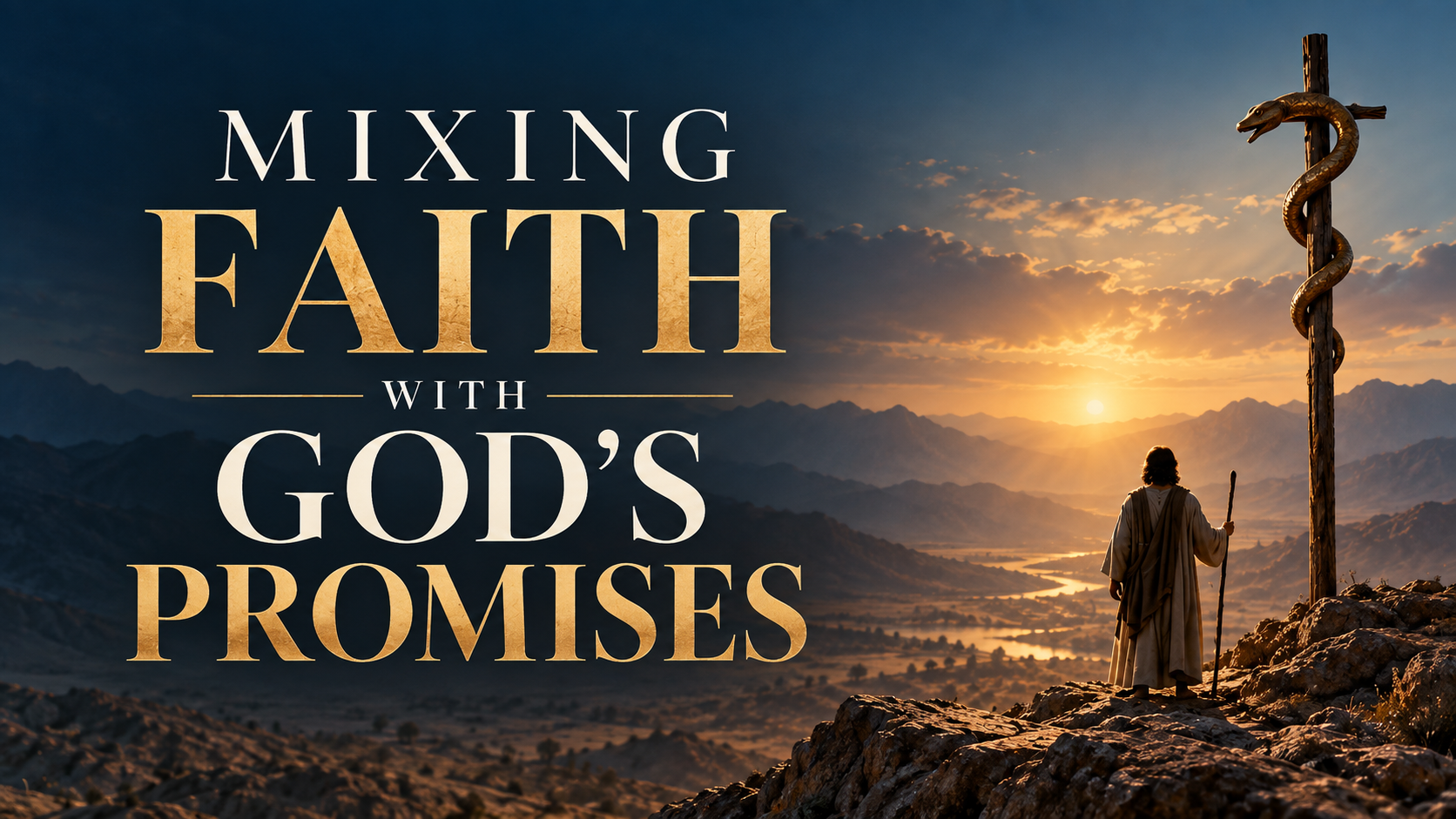
What you focus on shapes what you see, and when you continually complain about what’s wrong, you can become blind to God’s provision and even begin to loathe the manna at your feet. Instead of letting the snakes of life consume your attention, mix God’s promises with faith, keep your eyes on Jesus, sow gratitude, and let love—not spiritual elitism—be the true measure of your maturity.
What if the biggest thing standing between you and God's purpose isn't a lack of faith, but a life filled with distractions? Discover how renewing your mind with God's wisdom prepares you to recognize the divine opportunities He places in front of you every day—and to respond with confidence instead of hesitation.
When you live focused on what’s wrong—complaining, rehearsing what you lack, and overlooking the grace already in your life—the snakes of life will eventually come for you as you begin to reap the fruit of that perspective. But just as Israel looked at the bronze serpent and lived (Numbers 21:8–9), Jesus tells us to look to Him and believe (John 3:14–17), allowing the cross to turn our eyes from what’s wrong to the One who has already provided our salvation, healing, and transformation.
Attending Pete's funeral reminded me that the Church is at its best when it feels like family, where people are deeply known and genuinely loved. When we love one another the way Christ has loved us, we give the world a reason to say, "I want to be part of that family."
The cross is the lens everything else should be filtered through, and your real fight is usually with a destructive thought loop, not an outside force — so when a hard thought hits, name it and replace it with truth (rejection with acceptance, guilt with forgiveness, shame with grace). Isaiah 53 spells out that trade in detail, showing how his suffering directly answers your specific struggles. And don't keep asking "what's wrong with me" — your mind finds whatever evidence you keep hunting for, so choose to see your same circumstances through a hope-filled lens instead.
A mystical placebo is any ritual, special anointing, or spiritual condition inserted between you and what Christ has already provided — and like a sugar pill in a clinical trial, it can appear to work because your faith and expectation finally had somewhere to land, not because the ritual itself had any power. The trap is that you walk away dependent on the mechanism instead of the source, endlessly chasing the next evangelist, the next formula, or the next loophole to unlock what Jesus already paid for in full. Mature faith cuts through all of it — rooted in the finished work of Christ, it simply recognizes that healing, freedom, and abundant life aren't rewards you earn through the right spiritual steps, but a reality you receive by becoming fully persuaded that he who promised is faithful.
Through the death, burial, resurrection, and Pentecost, God made it possible not only to forgive us but to remove our old sinful nature, give us a new heart, place His Spirit within us, and make us new creations in Christ. Because God's Spirit now lives in us, we are no longer victims of our thoughts but have the ability to bring every thought captive and evaluate it in light of what Jesus accomplished through His obedience on the cross. Lasting transformation happens when we consistently replace thoughts that contradict the Gospel with the truth of who God is, what Christ has done, and who we now are in Him.

A deep dive into declassified FBI “Flying Disc” files reveals a strange mix of military reports, civilian sightings, alleged crash recoveries, and growing public fear during the late 1940s. The documents show that while many reports were likely explainable, the FBI and military still took the phenomenon seriously enough to investigate, catalog, and quietly coordinate responses across the country.
A healthy mother creates a healthy atmosphere. In this heartfelt Mother’s Day message, Pastor Clint Byars shares personal stories, biblical encouragement, and practical wisdom on emotional health, identity in Christ, parenting from peace instead of fear, and why your children need you grounded, stable, and thriving in your relationship with God.
Trials are a real part of life, but James makes it clear that they are not from God—using the same Greek word in James 1:2 and 1:13 to show that while we face them, we must never attribute them to Him. God works in us inwardly, testing and strengthening our hearts, but external trials come from living in a fallen world, not from His hand. Because of that, you can rest in His goodness, stop blaming Him for hardship, and confidently trust that in every trial, He is faithful to provide a way out.
If you don’t experience what Jesus went through for you, you’ll never fully live in what He’s offering to you. Psalm 22 gives us a prophetic window into the suffering of Christ—not just what happened, but what He felt—so that when you see it personally, grace becomes real, freedom becomes natural, and His resurrection life begins to flow through you.
What if the issue isn’t whether God is willing—but whether we actually know what’s been freely given to us?
Prayer is not asking a distant God to respond while you wait and wonder what He’ll do. It’s becoming aware of what He has already said, what Jesus has already finished, and what is already yours in Christ. Most of us start from the problem—what we see, what we feel, what isn’t changing—but real prayer begins from a different place: Christ in you, the hope of glory.
What if the issue isn’t whether God is willing—but whether we actually know what’s been freely given to us?
Prayer is not meant to be a fearful attempt to convince a distant God to care. It is a relational response shaped by what He has already said, who He has revealed Himself to be, and what Jesus has finished. When you let the Word of God move from information into your heart, it begins to expose fear, silence lies, and replace uncertainty with confidence. Real transformation doesn’t happen by asking harder—it happens when the Word becomes living in you.
Many believers were taught to think of prayer as presenting requests to God and waiting to see whether He decides to act. But when you begin to understand the finished work of Christ, prayer starts to look different. Prayer is not asking a distant God to fulfill a request and then wondering if He will answer. Prayer is persuading our hearts of who God already said He is, what His Word promises, what Jesus accomplished at the cross, and who we now are in Christ—then speaking confidently from that place of relationship with Him.
Perfect love is not flawless behavior but mature, complete love that brings the heart into wholeness and casts out fear. When we fully receive and experience God’s love—especially in light of Christ’s finished work—we gain boldness before God, freedom from torment, and the security to love others without defensiveness or resentment. As His love ripens in us, fear loses its grip, relationships heal, and we become stable, joy-filled witnesses of His grace in the world.
This message dismantles the hierarchy mindset in church by grounding everything in the New Covenant reality that “Christ in you, the hope of glory” (Colossians 1:27) and that “the anointing… abideth in you” (1 John 2:27)—not on a few leaders, but in every believer. Offices and gifts are real, but they are expressions of the same Spirit “worketh all in all,” given “to every man to profit withal” (1 Corinthians 12:6–7), so we don’t strive for special anointings or permission structures. The call is simple: stop obsessing over calling labels and go bear fruit—live organically from union with Jesus, love God, love people, and let the Spirit weave the body together through what “every joint supplieth” (Ephesians 4:16).
Jesus didn’t call us servants—He called us friends. This message explores how the Holy Spirit leads believers plainly, not through control or hierarchy, and why elevating authority over relationship creates confusion instead of freedom.
In John 14–17, Jesus repeatedly connects the manifestation of God’s presence to keeping His commandments—but He defines those commandments as loving God and loving people, rooted in the truth that “We love Him because He first loved us.” When heard as a servant, His words sound conditional and legalistic; when heard as a friend, they become a relational invitation where obedience flows naturally from being loved. Love is not permissive but transformative—it grounds us, fills us with joy and peace, produces unity that reveals Christ to the world, and creates the very environment where His Spirit works most powerfully.
Jesus said the Holy Spirit takes what belongs to Him and declares it to us. This message explores how Christ’s authority is shared, not withheld—and how we learn to live from it.

Jesus doesn’t relate to you as a servant trying to figure Him out. He calls you a friend. And a friend knows what the Father is doing. Confusion isn’t a sign God is withholding—it’s an invitation to renew your mind and live from the identity Jesus already gave you.
Jesus was angry with religious leaders who made following God difficult. He never intended faith to be heavy, confusing, or exhausting. When Jesus said, ‘My yoke is easy and My burden is light,’ He was inviting us into a shared life with Him—one where He carries the weight. Life itself isn’t always easy, but following Jesus is meant to be. When we let Christ bear our burdens, we become people who lift burdens off others instead of placing them on their shoulders. That’s who we are—we are burden lifters.
God never intended to relate to His people through fear, distance, or endless mediation. From the beginning, His desire was simple: to be with us. In this message, we behold the majesty of Christ—not as a distant ruler, but as Emmanuel, God with us. By contrasting Mount Sinai with Mount Zion, law with grace, and instruction with encounter, we rediscover the heart of the gospel: blessing before behavior, gratitude before striving, and intimacy before obedience. When we see God clearly through Jesus, fear loses its grip, identity is restored, and transformation flows naturally from knowing we are righteous, accepted, and deeply loved.
Many people have heard part of the gospel, but not the part that actually changes life. This teaching unpacks how the kingdom of God works like seed in the heart, why the Holy Spirit—not performance—is the power source, and how fixing our eyes on Jesus leads to lasting transformation.
Christmas is the announcement that God planted His kingdom in the earth. It is the declaration that heaven stepped into humanity, not to observe it from a distance, but to heal it from the inside out. When Jesus was sent, the kingdom was not postponed to a distant future—it was inaugurated. And as we honor Him, behold Him, and glorify Him, we experience both Him and His kingdom growing within us.
Jesus did not come merely to forgive sin or prepare us for heaven someday—He came to bring the kingdom of God into the earth now. The kingdom is not distant, future, or external; it has been planted, it is increasing, and it is meant to be lived from the inside out. When Christ reigns in the heart, He reshapes the mind, restores identity, and produces righteousness, peace, and joy through the Holy Spirit. We are not waiting for the kingdom—we are participating in its growth by changing how we think, guarding our hearts, and learning to live from the reality Jesus brought.
Few passages generate more confusion, fear, or theological argument than James’s statement: “Faith without works is dead.” For centuries people have read that line and immediately imagined a spiritual equation where faith alone is not enough, as if salvation rests on some blend of belief and moral performance. But that’s not what James is arguing. James is not correcting Paul, he’s not redefining the gospel, and he’s not creating insecurity about salvation.
Your words reveal the atmosphere of your heart, and gratitude is one of the fastest ways to change that inner environment. When thanksgiving rises first, peace begins to guard your emotions, your thoughts, and eventually your speech. As you intentionally practice Philippians 4:8–9 toward the people in your life—seeing what’s true, noble, lovely, and of good report—your reactions soften, your perspective shifts, and your relationships become places where the love of Jesus can actually be felt.
Jesus expected His disciples to read themselves into the miracle of the loaves—to let His provision reshape how they saw themselves and what they believed He would do for them. Instead, they slipped back into fear. We often do the same thing in our relationships. Luke 6 shows us how easily we judge people by assuming their motives, especially with family, and that judgment always multiplies back into more conflict than we ever intended. The blog calls us to interrupt that cycle by using Philippians 4. Pick someone you’ve had tension with and choose to think on what’s true, lovely, admirable, and honorable about them. When you do, you break the judgment loop, heal your reactions, and let the peace of God lead your heart.

When you’re facing something you feel the desire to pray about, ask yourself; Where is Jesus and who is Jesus in this situation? Are there any promises I can stand on and speak? What miracle of Jesus am I meditating on to persuade my heart of his power, character, and will in this situation?
Break the fear of making a wrong move. You’re not waiting on God—He’s waiting on you. Commit (roll) your works to the Lord (Proverbs 16:3), act from your new identity, and watch Him establish your plans as you walk in love.
